Han Dynasty stone carvings, witness of ancient history
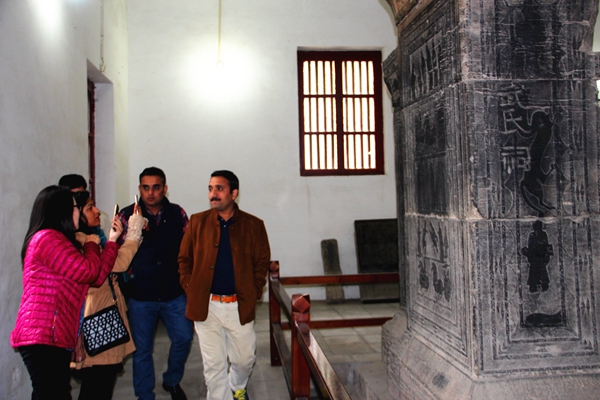
A group of more than 20 reporters from the world's major media organizations visited the Wushi Mausoleums in Jiaxiang county, Shandong province on Oct 20, to have a look at the precious historical stone carvings discovered in the graveyard of the Emperor Wu's family in the Eastern Han Dynasty (25-220) period.
The stone carvings in the Wushi Mausoleums are located in the town of Zhifang in Jiaxiang county. It is estimated that they were executed during 147-189. In 1961, they were included by the State Council in the first batch of national cultural relics to be protected.
They include a pair of lions, statues, 10 inscription tablets and 46 pictorial carvings. Of these, the lion is the earliest stone lion believed to have been rendered in China's history and the stone statues have been identified by experts as the first statues in the country.
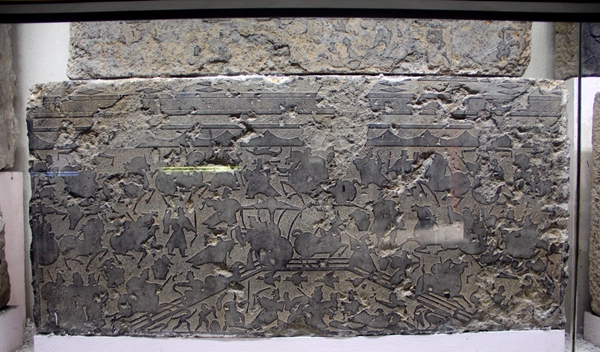
In addition, the stone-carved pictures from the Han Dynasty depict real life, historical scenes and legends, showing the dynasty's everyday life, played out in the different aspects of politics, war, culture and customs.
"The patterns on these stone carvings are so exquisite that it is hard to believe that the Chinese ancestors could have such a fantastic and magnificent imagination and such a high level of artistic expression techniques 2,000 years ago," said Binyam Tamene, editor in chief of Ethiopia's Daily Monitor Newspaper.
The relics have profound cultural elements and employ exquisite carving techniques. Experts say the stone carvings are unique historical and cultural heritage that need to be shared by all mankind and are effectively an encyclopedia of Chinese Han Dynasty history. They were named by UNESCO as one of the world's three greatest monuments, along with the Pyramids of Giza in Egypt.
Many scenes from the Wushi Mausoleums have become trademark designs of China's ancient art. Experts say the carvings constitute an epoch-making masterpiece in the history of Chinese architecture, art and sculpture.
 |
|
The stone carvings are relatively complete and representational art discovered in the graveyard of the Emperor Wu's family in the Eastern Han Dynasty (25-220) period. [Photo provided to chinadaily.com.cn] |
 |
|
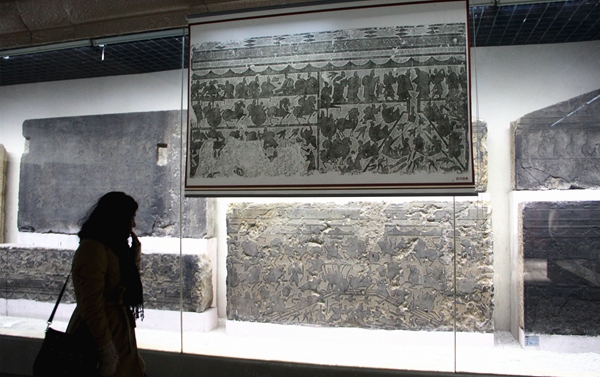
A reporter is attracted by the exquisite stone carvings discovered in the graveyard of the Emperor Wu's family in the Eastern Han Dynasty (25-220) period. [Photo provided to chinadaily.com.cn] |
 |
|
Foreign reporters visit the Wushi Mausoleums in Jiaxiang county, Shandong province on Oct 20. [Photo provided to chinadaily.com.cn] |
 Shandong Culture and Tourism Consumption Season
 Culture, tourism sectors pick up in Shandong as epidemic wanes