Centuries-old temple remains undisturbed
 |
|
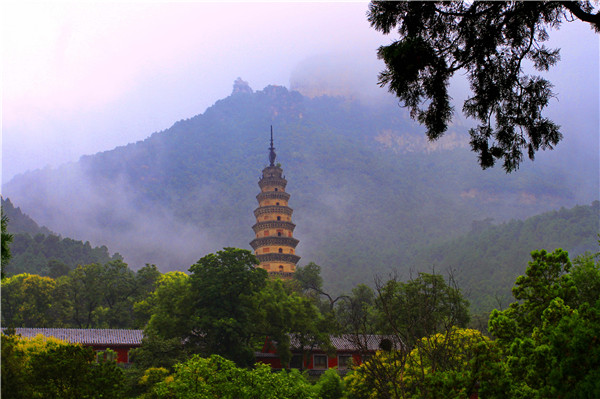
Pratyeka in Lingyan Temple. JU CHUANJIANG/CHINA DAILY |
Lingyan Temple has been one of the four most important temples in China since it was built more than 1,600 years ago in Jinan, Shandong province. Its peak lasted from the Tang Dynasty (618-907) to the Ming Dynasty (1368-1644), when it had more than 50 large buildings and over 500 monks.
The temple, which perches in a quiet valley on the north range of Mount Tai, had remained unknown to many until 1982, when it was listed as a key cultural relic site under State protection and was opened to tourists.
Mount Tai became a World Natural and Cultural Heritage site in 1987, and Lingyan Temple is a part of the mountain's cultural heritage. Besides its significance in Buddhist history, the temple has breathtaking natural views at an altitude of 700 meters.
In the mid-Qing Dynasty (1644-1911), the Emperor Qianlong stayed at the temple eight times on his way to inspect the south of China from Beijing, because of the picturesque views and the quietness of the temple.
The natural environment is well protected. The peaks surrounding the temple look like several monks chanting sutras and the forest is home to hundreds of kinds of birds and animals.
East of the temple, at the foot of a steep cliff, are three natural springs all beside each other. To the north and south of the temple, there are five more springs. The flow of the spring water is constant and the water is crystal clear. They are the main water source for the temple, as well as an important reason why Lingyan Temple has survived the twists and turns of a long history.
A sandal tree with more than one thousand years' history still flourishes beside one of the springs. There are many tales about the tree, the springs and the mountains.
Along the north-south central axis of the temple are the Hall of Heavenly Kings, a bell tower and a drum tower, Great Buddha's Hall, Five-Flower Hall, Thousand-Buddha Hall, Prajna (wisdom) Hall and Tripitaka Sutra (Buddhist texts) Pavilion. The main structures and foundation of these buildings date back to the Song Dynasty (960-1279), and the roofs and walls were rein-forced in the Qing Dynasty.
 Shandong Culture and Tourism Consumption Season
 Culture, tourism sectors pick up in Shandong as epidemic wanes