
Standards make cities smarter
( chinadaily.com.cn )
|
|||||||||


 |
|
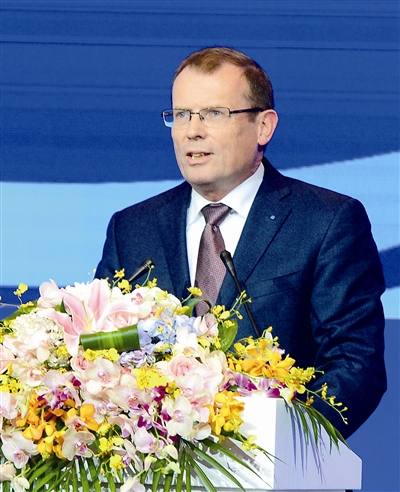
Frans Vreeswijk, secretary general and CEO of IEC, delivers a speech at the 2017 Qingdao Forum on International Standardization on June 28. [Photo/dailyqd.com] |
Frans Vreeswijk, secretary general and CEO of IEC
Smart cities promise improved quality of life for the world's estimated 3.9 billion urban dwellers, while at the same time allowing better, more efficient use of resources and improved security.
Meanwhile cities battle with pain points like sustainable supplies of energy or water, and eliminating gridlock and pollution while allowing citizens to move around.
On the operational level many of the systems used in today's cities are from different suppliers and maintained by different agencies who sometimes work in isolation. To connect them both physically and virtually, standardized interfaces are needed.
Building a Smart city is highly complex. Every city faces its own challenges and requires its own mix of solutions. Most smart cities are not built from scratch in one go. They gradually evolve and become smarter, bit by bit. With time, these individual islands of smartness grow together and interconnect, but only if they have been built using the same harmonized technical rules, most of which are embodied in standards.
International standards are the common denominator that allows cities to put in place interoperable platforms where private and public stakeholders are able to develop needed solutions. They are essential enablers that ensure an expected performance level and compatibility between technologies. They embody strong technical and process expertise and facilitate the replication of outcomes. Standards propose common metrics that permit comparative analysis and benchmarking of solutions. International Standards open the door to a larger choice of products and because many suppliers around the world use them in manufacturing they also facilitate long-term maintenance and repair of city infrastructure. This benefits both cities and their citizens.
Moving cities to greater smartness and sustainability also requires broad collaboration between stakeholders, including standards organizations. In fact, no single standards organization will be able to develop all the different standards cities will need.
The IEC, ISO and ITU are now preparing a letter of intent for cooperation. A smart city is a complex landscape and each organization has a core expertise in areas vital to successful smart city standardization.