City where environment means more than wealth
Updated: 2013-01-16
|
|||||||||


Ji Junming is probably the most powerful director of a city environmental protection bureau in China.
As chief environmental officer for Zhangjiagang, he has the "first approval right" in deciding if an enterprise can develop a new project and the power of veto in judging enterprise leaders.
"If we find the new project does not satisfy environmental protection standards, we are entitled to veto it. And if we find a certain enterprise has polluted the environment, no matter how much the firm contributes to the local economy, its manager will be criticized and fined," Ji said.
Ji has every reason to feel proud.
Although environmental protection has been listed at the top of the country's agenda and the Law on Environmental Protection has been in force since 1989, most environmental protection departments in China feel environmental issues do not receive the attention they should.
Many administrators view economic growth as the only visible evidence of their achievements since China shifted its focus to economic development in 1979. Thus they have invested less money in reducing water and air pollution, industrial waste and conserving resources than in new ventures because many feel only the new ventures will bring high returns.
But in Zhangjiagang, a thriving port city along the Yangtze River in East-China's Jiangsu Province, environmental protection is rooted in the hearts, kept on the lips and done by the hands of everybody from ordinary residents to top officials.
"We cannot develop the economy at the expense of the environment. It belongs to our offspring," Qin Zhenhua, Secretary of the Communist Party Committee of Zhangjiagang, told every important meeting.
Since 1992, the city government has conducted several promotional drives to clean up the city in the belief that, as the city gets cleaner, residents will become more and more proud of their own city, and more conscious of protecting the environment.
Tractors and motorcycles are forbidden from entering the city to cut down on exhaust fumes.
Every primary school student is required to carry a paper bag to collect his or her own litter.
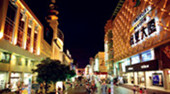
Smoking is forbidden in public places including the main shopping street. The promotions have worked.
There is no litter on the pedestrians-only street. No one smokes on the street even though there is no sign of inspectors.
"Many countries in the world polluted their environment so severely during the course of industrialization that they now have to make great efforts as well as spend huge amounts of money to treat the pollution. Their lesson is a wake-up call to us that we should protect the environment before pollution gets out of hand," said Ji Junming.
But such an attitude did not come easily to this booming city, said Ji. Instead it was formed at great expense.
Before 1979, Zhangjiagang relied heavily on agriculture for its income. After China adopted the reform and opening up policy in the late 1970s, township and village factories mushroomed.
In the late 1980s stacks gave off black smoke in almost every village in Zhangjiagang. The environment was severely threatened. Not until every resident had tasted the bitterness of pollution did they realize how serious the problem was.
On July 7, 1987, the first day of the national college entrance exam, coal tar polluted the running water in the city. The breakfast on thousands of tables had a foul smell and more than 1,000 students took the exam with empty stomachs. On this day all the restaurants were closed and some factories were forced to stop production.
Everyone was shocked.
The city's top officials called an emergency meeting and decided that to develop the economy at the expense of the environment was a crime and that every official should make great efforts to help protect the environment.
"This is the foundation of bettering the investment environment, developing an export-oriented economy, promoting a sustainable development of the economy and improving people's living standards," the meeting decreed.
It is because of such a unified and firm determination, that the Environmental Protection Bureau in Zhangjiagang has risen to such an essential position, said the director.
With the powerful "first approval right," the bureau has ordered 14 enterprises with serious pollution problems to close and forced a dozen enterprises, one of them with an annual output amounting to over 1 billion yuan ($120 million), to move out of the city and build new plants capable of treating their own pollutants.
Over the years, the bureau has also fined 56 enterprises with slight pollution problems. And the bureau has rejected 55 new projects, including an oil refinery in which a Hong Kong corporation had invested. On the grounds that an accident there could pollute the Yangtze River, the bureau decisively turned it down.
The city has also invested about 0.85 per cent of its annual GNP in environmental protection facilities, higher than the national average. It has invested 24 million yuan ($2.9 million) in constructing a polluted-water treatment plant, 20 million yuan ($2.4 million) in cleaning up a river surrounding the city, and 3 million yuan ($360,000) in building a rubbish-treatment facility.
"We want both golden and silver mountains (wealth) and blue water and green mountains," Ji said.