Inner Mongolia’s ethnic groups education during 12th Five-Year Plan
(chinadaily.com.cn)
Updated: 2016-11-21
The Inner Mongolia autonomous region is home to many ethnic groups and has seen some achievements in their education during the 12th Five-Year Plan (2011-2015), as follows:
1.Improvements in the ethnic groups education system
The region has 362 independent kindergartens for ethnic groups, with around 79,000 pupils, or 10.3-percent of the region’s total kindergarten population and 13.3-percent its students. It has 316 kindergartens with a Sino-Mongolian approach to teaching, with 51,000 pupils. It has 520 primary and middle schools for ethnic groups, or 17.51 percent of the region’s total, and catering to 14.15 percent of the total number of primary and middle school students. It also has 22 vocational schools with 47,000 students from ethnic groups.
In higher-level education, 36 of its 57 universities and colleges out provide Sino-Mongolian teaching catering to 57,900 ethnic group students.
Mongolians account for 17-percent of the region’s population, and 41-percent of the preschoolers get a Sino-Mongolian education, 34.29 percent of primary and middle school students get a bilingual education, and 62 percent of Mongolians do.
2. Better Sino-Mongolian education and larger numbers
Because of the significance of faculty, Inner Mongolia has looked for ways to develop better teachers for ethnic groups’ education and now has 27,900 teachers in bilingual kindergartens, and primary and middle schools, or 11.48 percent of the region’s total, and 7,023 in universities and colleges, or 22.49 percent of the total.
3. Greater investment in ethnic group education
In addition, the budget for ethnic group education increases yearly, and, by now, compulsory education, which lasts for nine years is completely free for students from ethnic groups, and in some areas even lasts for 15 years. The region also has an aid system that covers the entire education from pre-school to higher education.
In 2011 - 2015, the region started major projects for school infrastructure and building safety and a special fund for ethnic groups education that reached 60-million yuan ($9.32 million) per year by 2013, and funds at the league or city level reaching nearly 50-million yuan, with special funds for ethnic groups amounting to a total of 2-billion yuan for the five-year period.
4. Linking ethnic group students to employment.
There are policies that back start-up businesses and employment of ethnic groups graduates, for example, offsetting aside 15 percent of the jobs for the bilingual graduates going into civil service, and subsidies or grants for non-public organizations with bilingual employees. Inner Mongolia authorities have come up with many policies for ethnic group education for healthy development.
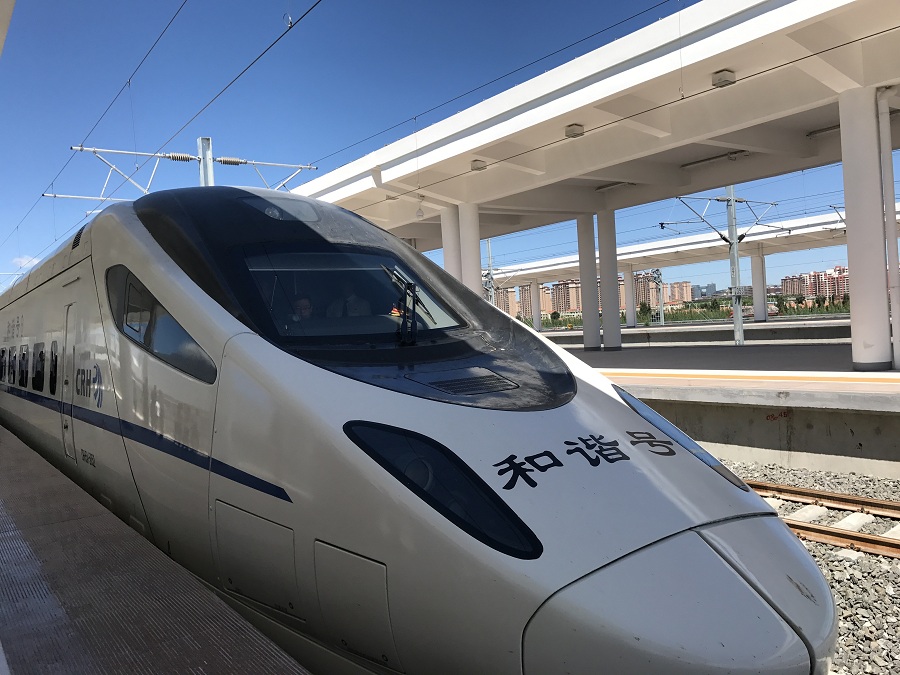
High-speed train debuts in Inner Mongolia
A bullet train departed Hohhot East Railway Station for Ulanqab marking the start of high-speed rail services using Inner Mongolia’s first newly-laid high-speed railway on Aug 3.