Color and pageantry of the Ethnic Games
By Sun Xiaochen (China Daily Europe)
Updated: 2014-11-28
Originating from ancient farm work and military training, traditional ethnic sports in China have evolved into one of the country's most distinctive cultural elements appealing to athletic fans nationwide.
Horseracing, goat grabbing, stilt walking, shuttlecock kicking and a series of other colorful sports are featured at the National Traditional Games of Ethnic Minorities every four years.
The event garners nationwide attention every time it is held due to its display of diverse and rich local cultures and folk customs.
The sports combine exercise, artistic charm, recreation and education, representing the unique identities of ethnic groups in the country.
According to the State Ethnic Affairs Commission, more than 1,000 kinds ethnic sports are acknowledged nationwide, including Mongolian wresting, horse riding by the Uygur group, the stilt walking of Dong people and a spinning top sport among the Yao people.
Other widely popular events include the breathing exercise health qigong, kite flying and dragon boat races.
A total of 17 competitions and more than 100 demonstration events will be featured at the 10th National Traditional Games, which will be held in Ordos, Inner Mongolia autonomous region in August 2015.
Some traditional ethnic sporting competitions have developed into regional festivals in ethnic enclaves after hundreds of years of evolution.
The 2014 Nadam Fair in July, a traditional Mongolian pageant featuring entertainment and games, attracted herdsmen from four townships and 22 villages to take part in wrestling, horseracing and archery while celebrating good year in stockbreeding.
As a few traditional ethnic sports have died out, officials have moved to preserve and pass on the sports treasure of China's 55 ethnic minorities.
"But with the scale of the ethnic games increasing edition by edition, we are facing new challenges," Tondrub Wangbum, vice-minister of the State Ethnics Affairs Commission, told Xinhua news agency.
"We should not focus on the number but the quality of the ethnic events.
"We need to widely promote ethnic sports events and an improved level to help them develop in a healthy way."
Since the 1990s, more than 10 universities in China have begun to offer traditional ethnic physical education courses, while a growing number of local primary and secondary schools include ethnic events as selective programs in their PE curriculums.
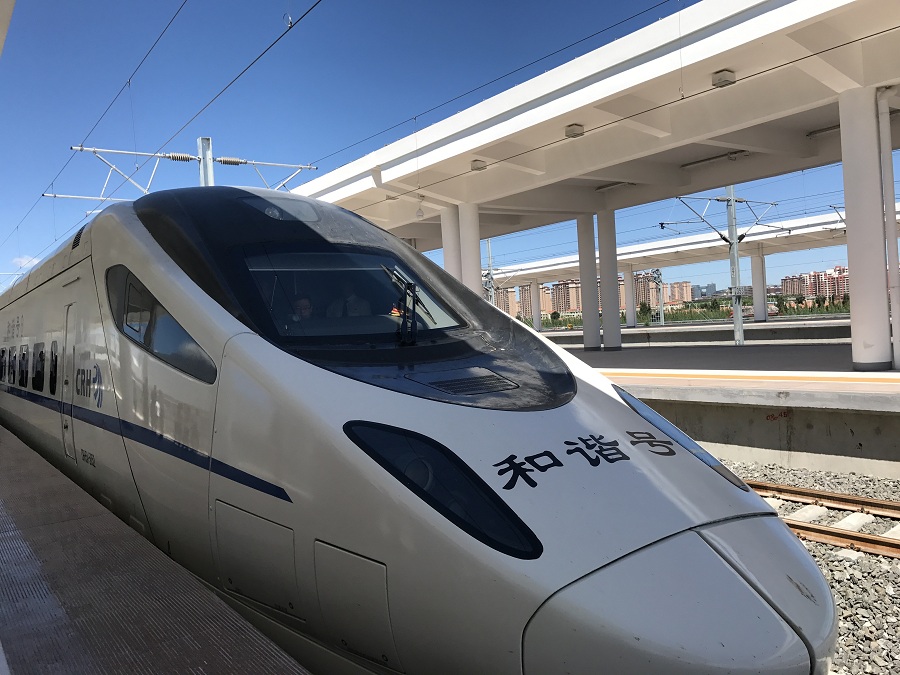
High-speed train debuts in Inner Mongolia
A bullet train departed Hohhot East Railway Station for Ulanqab marking the start of high-speed rail services using Inner Mongolia’s first newly-laid high-speed railway on Aug 3.