|
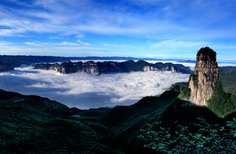
BEIJING - Shennongjia, a forest region and long rumored home of the elusive Bigfoot-like ape man in the central province of Hubei, wants eco-tourism there to boost the underdeveloped region's economy.
Less than two months after the Shennongjia Nature Reserve was named a national 5A-Class Scenic Spot by the National Tourism Administration, the region has teamed up with Beijing, seeking the Chinese capital's help to develop its tourism.
The Shennongjia Forest Region and Beijing Municipal Commission of Tourism Development signed an agreement earlier this week, according to which Beijing will help Shennongjia promote tourism.
Travel agencies in Beijing will launch several "Beijing + Shennongjia" tour programs, said Qian Yuankun, Party chief of the forest region.
Beijing has also agreed to provide training for tourism professionals in the poor region, Qian said.
Beijing may also send chartered flights or trains to Shennongjia during peak seasons as getting to the mountainous region sometimes is challenging, said Qu Hao, an official with the state-owned Shennong Tourism Company.
Qian is expecting an eco-tourism boom in the coming years with Shennongjia's first airport expected to be completed next year.
Meanwhile, its new title of national 5A-Class Scenic Spot, the country's highest official ranking of scenery spot which means both charming sceneries and high-quality services, will draw more tourists, according to Qian.
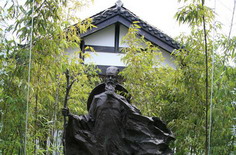
Located deep in the remote mountains in Hubei, Shennongjia Nature Reserve has long been rumored to be the home of the elusive creature known in China as the "Yeren," or "Wildman" in English. It is also referred to as "Bigfoot" after the legendary North American ape-man.
More than 400 people have claimed sighting Bigfoot in the Shennongjia area since last century, but no hard evidence has been found to prove the creatures' existence.
The region is also dubbed "Noah's Arc" for animals and plants in the glacial period, as it provided shelter for animals and plants from glacier activities that were prevalent elsewhere during the Quaternary Period some 2.5 million years ago. It has preserved an array of plants that existed in the Tertiary Period and is widely called a home of living plant fossils.
With abundant rain and water resources and a middle-latitude location, Shennongjia is home to more than 3,700 species of plants and at least 1,050 kinds of animals. At least 40 plant species and 70 animal species are under key state protection.
The place is also home to the rare golden monkeys, which are on the verge of extinction and were first spotted in Shennongjia in the 1960s.
The United Nations Educational, Scientific and Cultural Organization (UNESCO) put Shennongjia on its World Network of Biosphere Reserves list in 1990.
|