

Jinjiang is a beautiful coastal city in southeastern China, with Taiwan to its east and the Jinmen Islands only 5.3 sea miles away.
The city has a land area of 649 square kilometers and 121 kilometers of shoreline.
With favorable geographic conditions, Jinjiang has developed international trade since ancient times. Trade peaked during the Song and Yuan dynasties (960 - 1378 AD), leading Jinjiang to match the Port of Alexandria in Egypt and making Jinjiang one of the most important origins of the ancient Maritime Silk Road.
The Maritime Silk Road, besides producing enormous wealth for locals, also upgraded manufacturing techniques and blended exotic cultures.
Watertight bulkhead technology of Chinese junks
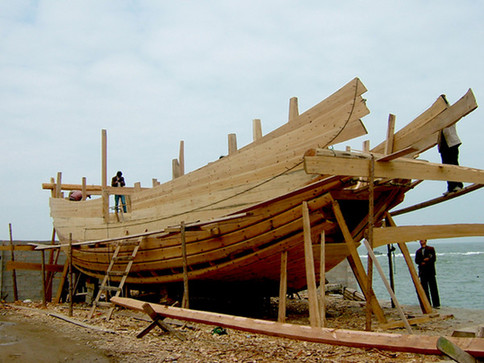
This is a traditional skill that dates back to Jin Dynasty. Junks are built mainly from camphor, pine, and fir timber, with traditional carpenters tools and key skills like rabbet-jointing and caulking. A leading carpenter designs and leads others to build a strongly jointed sailing junk with multiple watertight compartments.
Cao'an Temple
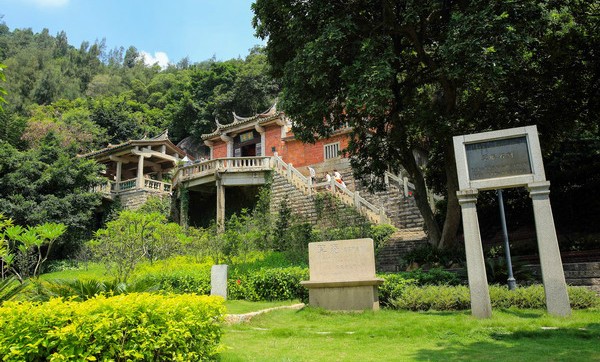
Hidden in the Huabiao Mountain, Cao’an Temple is one of the best preserved Manichean relics in the world. It was built in the Song Dynasty (960 - 1279) and has a 1.5-meter-tall sculpture of the Prophet Mani made of granite with a mysterious color. It is a key relic site under state protection.
Chendai Ding Clan Temple
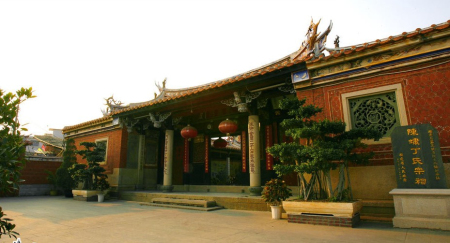
This temple is a key relic site under state protection that was built in the Yongle reign (1403-1424) of the Ming Dynasty, but was destroyed in the civil war of 1560, and rebuilt in 1600. It is a good example of traditional Chinese wood construction.
The powerful Ding clan in Chendai town are of the Hui ethnic group. Their ancestors relocated from Central China during the Yuan Dynasty.
Cizao kiln site
This site in the town of Cizao once held an important kiln during the Song and Yuan dynasties. Cizao has an abundance of porcelain clay and had many kilns dating back to various dynasties.
This cliff, and Dashifo (Big Stone Buddha) Temple are at the foot of Zhuowang Mountain near the town of Jinjing and has many stone Buddhist statues. The temple was rebuilt in 1935 and 1982 and is a relic site under provincial protection.
Anping Bridge
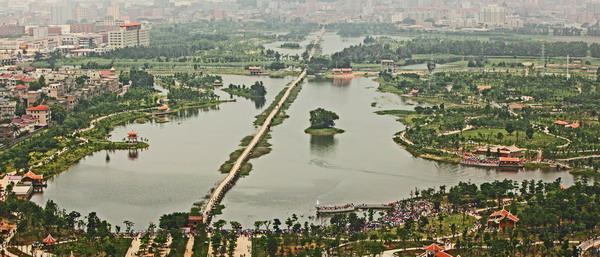
The bridge, linking Anhai town and Shuitou town across the ancient bay, is a token of the trade boom during the Song and Yuan dynasties. It is now an important relics site under state protection.
Contruction on the 2,255–meter bridge began in 1138 and it is the longest stone bridge from the Middle Ages. It has pavilions, terraces, towers, stone statues and ancient tablets.
The Chinese government's new Belt and Road Initiative now offers a new opportunity for Jinjiang and will mark the opening of a new chapter of maritime glory.