We have launched E-mail Alert service,subscribers can receive the latest catalogues free of charge

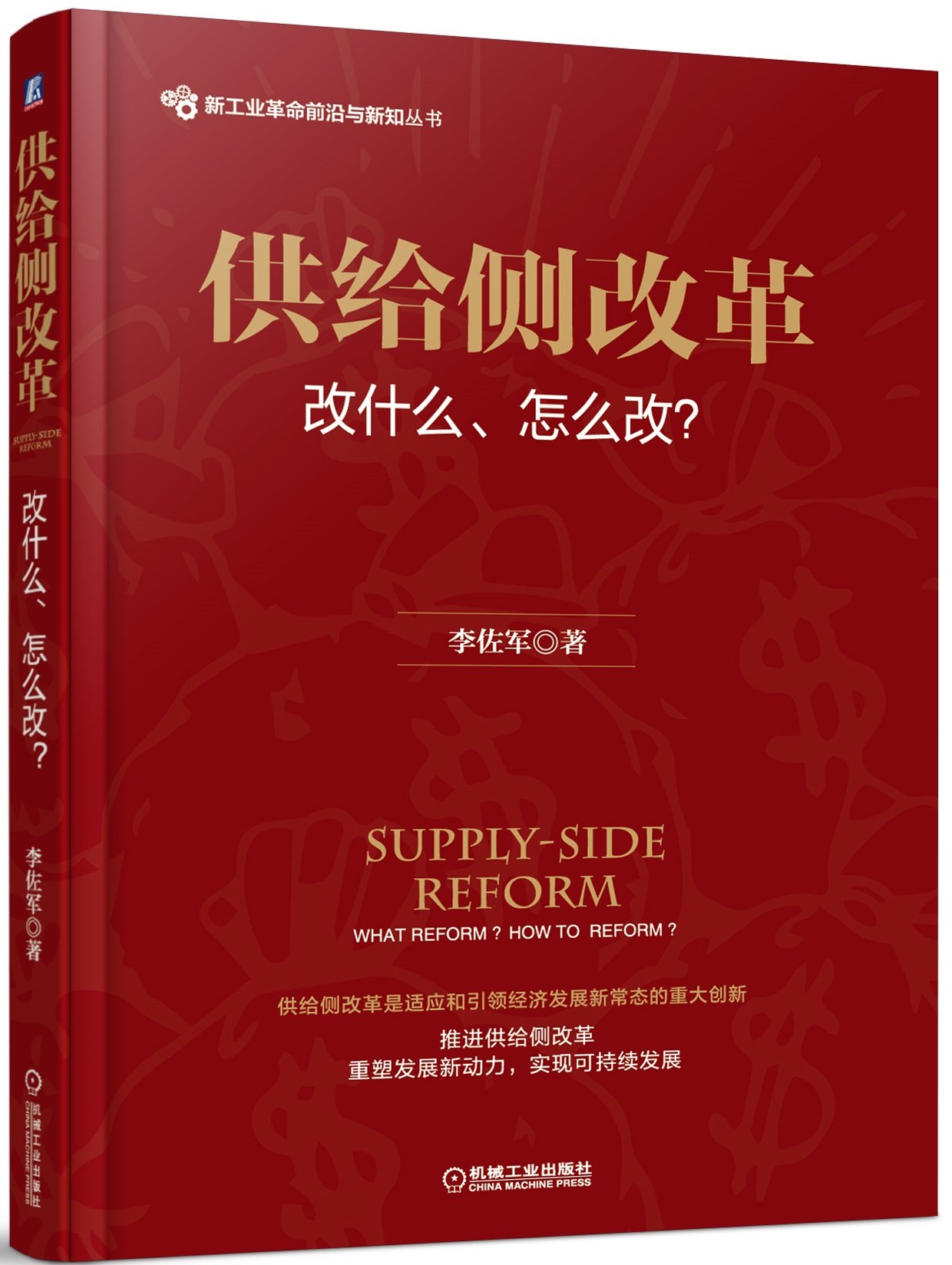
Preface to “Supply-side Reform: What to Reform and How to Reform?”
2016-06-27


Li Zuojun
“Supply-side reform” has become a hot social issue since it was formally raised at the Central Economic Working Conference in 2015.
Supply-side reform has a profound meaning. Supply side has a close relationship with institutions, so promoting reform from supply side means the changing of the relation between the government and the market and also the change of system, model and impetus. From the global perspective, various countries still adore the demand-side administrative policy, such as the quantitative easing (QE) policy in the United States and “Abenomics” in Japan. China also adopted the demand-side administrative policy represented by 4 trillion yuan investment after 2008. However, faced with the complex economic situation currently, China has chosen the supply-side reform rather than demand-side one, trying to ease the remaining contradiction of high capacity, high stock, high leverage and high cost so as to provide new driving forces to enhance productivity.
I have been focusing my study on supply-side issues for quite a number of years. In 2001, I suggested to enhance the promotion of supply-side policy when the economy was witnessing a swift growth. When the demand-side management mode prevailed in 2009, I noted the importance of the impetus function to economy, which should not only be viewed from the demand side, but also from the supply side. In 2012, the government once again put emphasis on demand-side management mode, whereas I pointed out that the function played by supply-side policy to economic development shouldn’t be underestimated. Since 2012, I have stressed on different occasions the role played by the “three engines” from the supply side, i.e. to realize economic growth through institutional reform, structure upgrading and factor upgrading.
My lasting attention to supply side problems derives from my understanding and learning experience of economics. Along with the development of economics, supply-side management policy has been demonstrated respectively by physiocrats, Adam Smith, Jean-Baptiste Say, Karl Marx and other masters from different perspectives in relation to its function in economic development. During my study for a Master Degree, I was taught by Prof. Zhang Peigang on development economics and came to understand the importance of supply factor to economic development. During my PHD’s study, I learned the institutional economics from economist Wu Jinglian. Supply side reform focuses on the role played by institutions, which is consistent with the theory of institutional economics.
This book mainly touches upon the approaches and ways toward supply-side reform. Supply-side reform relating to the practical problems of China’s economy has just made a start, and what are the issues for reform and how to address the relevant issues need serious study. This book tried to give some answers to these issues.
The publication of this book is inseparable from the assistance given by Prof. Zhang Peigang and Prof. Wu Jinglian, who have not only imparted economic theories to me, but also given me academic instructions. I am indebted to Prof. Gao Shiji for his kind help and generous support. I also wish to acknowledge my debt to my wife Lin Yu and my daughter Li Xinlin for their lovely understanding of my research work. Thanks are given to China Machine Press, the People’s Daily, Guangming Daily, Economic Daily, China Economic Times, Economic Information Daily, Global Times, Shanghai Securities News, and Beijing Daily for their efficient work and valuable services. I am fortunate enough to have the advantage to receive help from journalists and editors from China Comment, News Report, Ziguangge, Reform, China Financial Weekly, China Development Observation, and China Economic Report. The task of revision of this book has been entirely my responsibility.