We have launched E-mail Alert service,subscribers can receive the latest catalogues free of charge

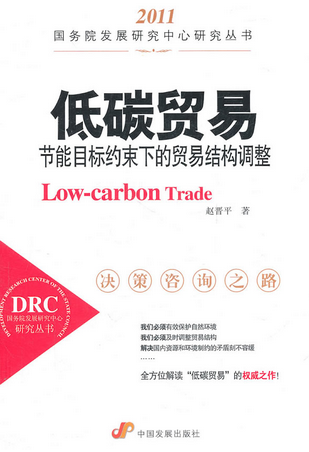
Low-Carbon Trade: Trade Structure Adjustment based on Energy-Saving Objectives
2015-11-24


 |
|
Low-Carbon Trade: Trade Structure Adjustment based on Energy-Saving Objectives |
Zhao Jinping, Research Department of Foreign Economic Relations of DRC
China is a country with emerging market economy at the middle-to-later period of industrialization. During this period, its economic and social development, against the backdrop of global response to climate change, will face serious constraints resulting from environment and resources in the long run. How to realize the transformation of economic development pattern, reduce the consumption of key resources such as energy, and effectively protect natural environment to contribute to global emission reduction while maintaining rapid and long-term economic growth has become a significant and strategic issue concerning China's capacity for sustained economic and social development and its external environment. The following problems remain major points in research on trade structure adjustment policies: 1. How to scientifically evaluate the energy intensity of trade in industries including embodied energy industry; 2. How to compare trade structure changes such as commodity, market, and trade pattern which affect the energy intensity of GDP; 3. How to choose adjustment schemes of trade policies and trade structures in different industries in accordance with multi-objectives regarding energy saving and emission reduction and maintaining the speedy growth of economy and employment; and 4. How to ensure the transformation and upgrading of foreign trade via comprehensive measures. The book “Low-Carbon Trade: Trade Structure Adjustment based on Energy-Saving Objectives” makes an analysis of and gives relevant answers to the above-mentioned problems. It expounds the mutual influence between energy saving and trade structure adjustment and provides revealing reference and facts for research on trade policies based on energy saving objectives.
The book contains seven chapters. Chapter One discusses China's energy intensity and its influencing factors. Chapter Two analyzes the influence of export growth on energy consumption. Chapter Three elaborates the relationship between trade scale and trade balance. Chapter Four focuses on the analysis of embodied energy trade structure. Chapter Five explains the interrelation between trade structure adjustment and economic and employment growth. Chapter Six illustrates trade policy choices based on energy intensity objectives. The last chapter provides policy options for accelerating the transformation and upgrading of foreign trade.
The book is written by Zhao Jinping, Director-General of the Research Department of Foreign Economic Relations of the Development Research Center of the State Council. If there are any views inappropriate in this book, it is hoped that dear readers would not hesitate to give their comments.