

 |
|
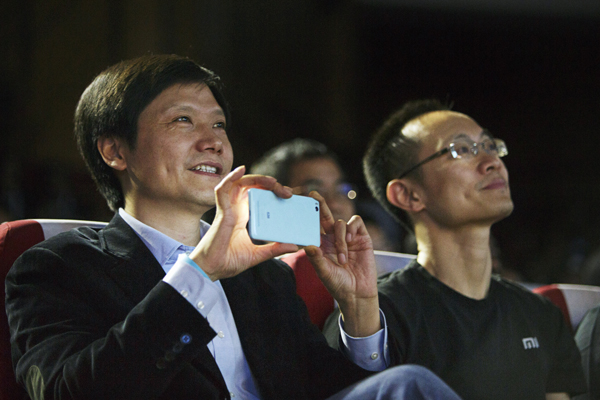
Billionaire Lei Jun, chairman and chief executive officer of Xiaomi Corp, holds a smartphone as Lin Bin, president and co-founder, looks on during a news conference in New Delhi. BLOOMBERG |
Xiaomi's Indian shipments grew 15.3 percent in the fourth quarter, beating the industry's 5.2 percent, according to research firm IDC. That jump stood out given that the Indian government's "demonetization" move to scrap certain rupee notes dragged down smartphone sales in late 2016.
It commanded 10.7 percent of the market, taking second place and edging past Lenovo Group Ltd. Samsung controlled a quarter of the market, but its shipments shrank on a quarterly basis, said IDC.
Globally, the smartphone market is expected to bounce back from 2016's record-low growth of 2.5 percent. IDC projects a 4.2 percent rise in shipments this year, boding well for major players including Xiaomi though new Apple and Samsung devices will offer stiff competition.
Xiaomi's success in India came despite a lack of progress in key areas like Europe, the United States and South America.
Its drive into the Asian country was spearheaded by former international head Hugo Barra, who left for Facebook Inc in January as Xiaomi's global expansion stalled. It pulled out of Brazil a few months back, while Huawei Technologies Co is the dominant Chinese brand in developed markets like Europe.
Barra once said Xiaomi was prepared to enter the US market, though for now it only sells ear buds and power banks to Americans.
Its overseas expansion will now mainly focus on emerging markets such as eastern Europe, Russia and Southeast Asia, including Vietnam.
Back home, Xiaomi is on the verge of becoming an also-ran, a painful reversal from the stunning ascent that crowned it the country's most valuable technology startup in 2014. It has ceded ground rapidly to local rivals in just the past two years: Oppo and Vivo dominated by enlisting tens of thousands of retailers in rural areas and lower-tier cities, while Huawei's high-end devices appealed to more status-conscious users.
Xiaomi took 7.4 percent of the Chinese market in the last quarter of 2016, lagging its three main rivals, according to IDC.
Lei is now re-tooling the seven-year-old online-only sales model that originally catapulted Xiaomi to the top, to let brick-and-mortar-stores shoulder an increasing amount of the sales burden. It plans to open 1,000 stores in the coming three years across China, and double its offline retail presence in India.
"Everyone realizes the online market is very limited," Lei said, explaining Xiaomi's new-found focus on physical retail.
While new products require spending on marketing and research, Lei said Xiaomi for now didn't need to raise additional capital. He also wouldn't address persistent speculation about an initial public offering down the road.
"We have more than enough cash," he said.
BLOOMBERG-CHINA DAILY