|
In ancient China when farming played the most important role in making a living, Huizhou was an exception. In Huizhou, trade and business supplanted farming as the local people's first way of making money and supporting a family.
|
"Historic records say even a small village of ten households in Huizhou persisted in Confucianism studies."
|
|
|
However, the business-oriented Huizhou people never took education lightly. Actually, almost all Huizhou children studied Confucianism as a compulsory course. Historic records say even a small village of ten households in Huizhou persisted in Confucianism studies.
Business and Confucianism were thus closely related, which characterized the Hui merchants. On the one hand, generations of the Hui Confucius merchants invested in Confucianism education after their business success. On the other hand, Confucianism imposed great influence on their business operation. The emphasis on Confucianism and education contributed to Hui merchants' outstanding management skills and flexible strategies.
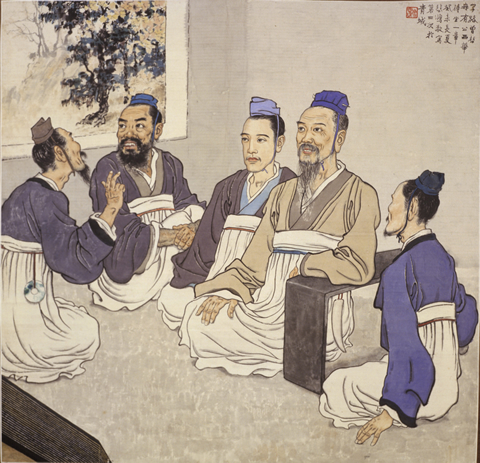 |
| The business-oriented Huizhou people never took education lightly. |
Historical records show most of the Hui merchants were well educated, some of them went back to study Confucianism when they retired from business, while others kept reading and studying as they did business. Some even invested in the construction of Confucius schools.
Zheng Kongman, a Hui merchant in the Ming Dynasty(1368-1644), was a good example of the Confucius merchants. Zheng would take books with him whenever he traveled on business, and squeezed any time to read. Each of his business visits would be followed by visits of the local scholars and authors. A neighbor, merchant Zheng Zuo, was even more addicted to Confucius books, to such an extent that his partners and competitors wondered whether he was really a businessman.
Hui merchants thought the wealth they obtained through business should not stop the education of their children, and that wealth accumulation, without the support of Confucianism, counted as little.
|