Chinese-led study finds different variants of MERS virus
 |
|
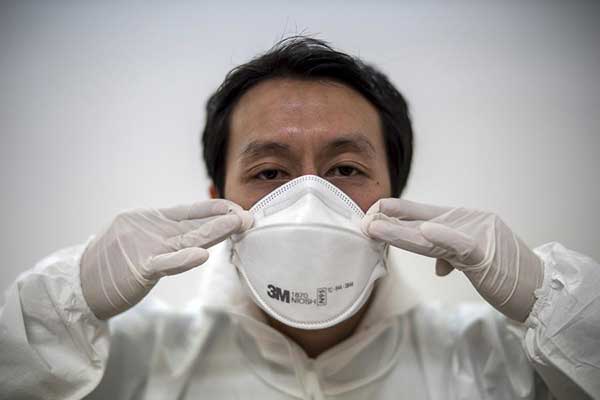
A member of medical personnel puts on a protective mask during a drill as part of preparations in the event of a Middle East Respiratory Syndrome (MERS) outbreak, at a private hospital in Bangkok, Thailand, June 24, 2015.[Photo/Agencies] |
The Middle East Respiratory Syndrome (MERS) coronavirus has become enzootic in dromedary camels in Saudi Arabia and diverged into five different variants, according to a Chinese-led study published in the Friday issue of the journal Science.
In a second study published in the same journal, researchers designed a vaccine shown to be effective in protecting dromedaries against the virus.
Over the past three years, several MERS outbreaks have been reported in the Middle East and most recently in South Korea, with a fatality rate of roughly 35 percent.
Arabian camels are a common host for the MERS virus, and one of the most likely sources of human infection, the researchers said. The virus can diversify in the animals and then be passed to people, but little is known about its prevalence there and the route by which it is transmitted to humans.
To gain more insights, researchers took samples from more than 1,300 camels in Saudi Arabia, the country most affected by MERS, between May 2014 and April 2015.
The overall infection rate of the MERS virus among this sample was 12 percent with a peak during the winter season, December 2014 to January 2015, at 21 to 23 percent, said the study, led by Professor Yi Guan and Assistant Professor Huachen Zhu at the University of Hong Kong, in collaboration with King Abdulaziz University, Saudi Arabia; and scientists from Mainland China, Australia and Egypt.
The MERS virus was predominantly shed from the respiratory tracts of camels, with over 25 percent of nasal swabs positive for coronaviruses, and only one percent of samples from digestive tracts positive. "Thus, air-borne transmission is the most likely way to spread the virus," they concluded.
Genetic sequencing identified five different lineages of the virus, all of which have the ability to infect both humans and camels, said the study.
Viruses that led to the South Korean outbreak and the recent human infections in the Middle East were from lineage 5, which was generated by recombination between viruses of lineages 3 and 4.