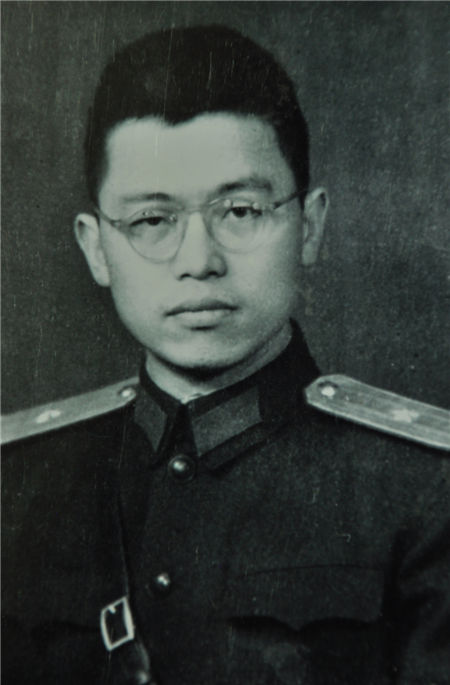
How a teenage clerk turned into a war veteran
 |
|
Photo provided to China Daily |
The Japanese forces had some 60 fortified locations in that county and often carried mop-up operations against the Chinese. But the local troops had developed smart tunnel systems to protect themselves and the villagers from the Japanese soldiers. The Chinese often hid in the tunnels during the day and carried on guerrilla activities at night.
Guo's committee helped the Chinese fighters to destroy enemy targets, dig more tunnels and mobilize local residents to join their efforts. They had to fight with minimal food and low-end equipment and arms, which were in sharp contrast to those being used by the Japanese troops then. Medical care was limited and many soldiers died from injuries.
"We sometimes gathered for games and singing," Guo says. "Sadness from losing our comrades lasted a short time; it prompted us to fight with greater courage."
Speaking of the many battles he fought at the time, Guo says the Japanese troops once tried to damage a tunnel in Hejian by flooding but didn't succeed.
Guo, who saw fellow soldiers fall in the war, says the support and protection of local people of the county and its surrounding areas ensured the safety of many other Chinese soldiers who lived to cherish the victory.
"We lived together with local villagers as if they were family. They would offer us cover in dangerous situations," he says.
In the later years of the war, the Chinese guerrilla forces gradually expanded. By the end of the war in 1945, they could mount attacks on the Japanese forces without using tunnels.
But most of all, Guo vividly remembers the news of the Japanese surrender.
"I couldn't believe my ears at first. I was so excited that I cried aloud," Guo says.
Guo later fought in the Korean War in the '50s, before he was found to have a heart problem and transferred to Beijing for treatment.
In 1982, he retired as Party secretary of the Institute of Basic Medical Sciences, an affiliate of the Chinese Academy of Medical Sciences.
Guo, who has spent time on calligraphy and traditional Chinese painting in recent decades, has also written a wartime memoir titled Fighting in the Glorious Days.
"I am an optimist. I don't look at my past experiences (during the war) as a kind of suffering. They are valuable and unforgettable to me."
liuxiangrui@chinadaily.com.cn