The uncomfortable side of tradition
 |
 |
But nowadays when you say "Let's all don a Hanfu" you may have colleagues or schoolmates who look and act every bit like you do, but are not of the Han majority.
This will happen more and more often as our economy further helps our population to move around the country.
I didn't give much thought to lyrics of patriotic songs that rejoice in our having "yellow skin and black eyes and black hair" until I heard officials in the Xinjiang Uygur autonomous region had complained about it.
Some of our ethnic minorities do not look like that, and singing these songs in that area will make them feel they are being left out.
We often call ourselves "descendents of the Yan and Huang emperors", using the phrase as a catch-all for the Chinese nation.
But when I took my first trip to Guizhou, a mountainous province in southern China with many ethnic groups, I learned that locals call themselves "descendents of Chiyou", a half-mythical tribal leader of the ancient Nine Li tribe.
The history books tell us that Chiyou was defeated and driven into the mountains by the better-known Yan and Huang.
What would they feel when we proudly claim to be the offsprings of the winning team when our brethren came from the side that lost.
This kind of complication probably never dawns on most Han people simply because we rarely come into physical contact with those with a different origin story.
It may sound trivial to discuss such matters in the vast Han area, but if we assume the stand of someone who does not share our physical features, clothing style or gastronomical habits, we may understand that too much emphasis on such things can not only set ourselves apart, but also alienate others, albeit inadvertently.
After all, we are all part of the big Chinese family, and our regional and ethnic cultures should serve to influence and enrich each other.
We should cherish our traditions, including the different ways of doing things down in our small villages, but we should also realize that we have more in common than not.
We should never let our differences be stumbling blocks in our communication.
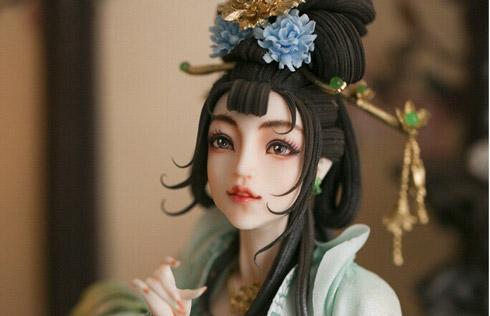
As for the future of the Hanfu, I'm afraid it will be consigned to a visible but not accessible place, a mental pantheon, so to speak.
This means you'll see highly publicized photos of people wearing it but you'll count yourself lucky to bump into someone actually wearing it in real life.
I happen to have a few friends from other ethnicities. When I asked them how often they don their colorful outfits, I expected an answer like "weddings and funerals".
But they replied: "I don't even have something like that, let alone wear it."
So, what did they wear at their own weddings? "A suit" was the most frequent answer.