Comments
  Print
Print  Mail
Mail  Large Medium Small
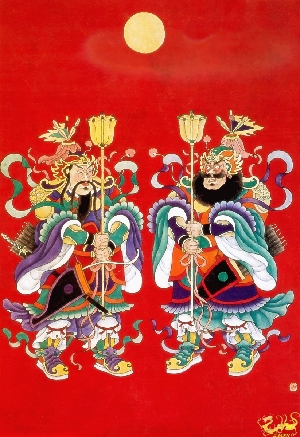
Lunar New Year's Eve, the last day of the old year, is one of China's most important traditional holidays. Homes are spotless in and out, doors and windows are decorated with brand new Spring Festival couplets, New Year's pictures, hangings, and images of the Door God, and everyone dresses up in new holiday clothes that are decorated with lucky patterns and auspicious colors.
To the Chinese, New Year's Eve dinner is more than just enjoying a grand feast. On this day, all Chinese all over the world, no matter how far away from home they are or how busy at work, will be home for dinner.
The elaborate dinner is laden with auspicious food. The names of the dishes express the wish for good luck in the coming year. Most dishes are prepared with uncut or whole ingredients to ensure integrity and perfection. The use of knives is considered unlucky as this could sever the family's good fortune.
The sumptuous New Year dinners are prepared with the most delicate culinary artistic skill and good wishes to welcome relatives and friends with a choice of festive treats. Today, a growing number of Chinese choose to have reunion dinners at restaurants or invite cooks home to make dinners for them.
Every year on New Year's Eve, people paste up images of the Door God on their doors. The Door God, or guardian of the threshold, is a very old deity. In its earliest incarnation, it was embodied in the door itself. The Door God was first portrayed in human form during the Han Dynasty, first as the warrior Cheng Qing, and later as Jing Ke. The door gods of the Northern and Southern Dynasties were named Shen Tu and Yu Lei. During the Tang Dynasty, two great generals named Qin Shubao and Yuchi Jingde were in charge of protecting the officials of the imperial palace. Emperor Tang Taizong (Li Shimin) felt that the generals were working too hard, so he ordered their portraits to be painted and hung beside the palace door to assist them. The two generals thus became associated with the ancient guardians of the threshold, and have been known as door gods ever since. During the Five Dynasties Period, Zhong Kui became the new door god. The Song Dynasty saw the further development of existing guardians and protectors. In addition to door gods, images of the gods of Blessings, Prosperity, and Longevity, as well as the Ten Thousand Deities and the Three-Treasures Buddha, are often hung in living rooms and bedrooms. These guardian deities were thought to protect the household from evil influences and repel demons.
In addition to door gods, Spring Festival couplets, New Year pictures, and papercuts, many families also paste up special decorations known as menjian on Lunar New Year's Eve for good luck. Made out of red or colored paper, these decorations consist of papercuts plus auspicious sayings, with a fringed bottom. Today, instead of the traditional menjian, many people put up "Chinese knots," a type of decoration made out of red cord tied into lucky designs.

 Paintings feature the natural beauty of Beijing
 Peking Opera inherited in primary school
 What's on in Beijing (Nov 18-24)
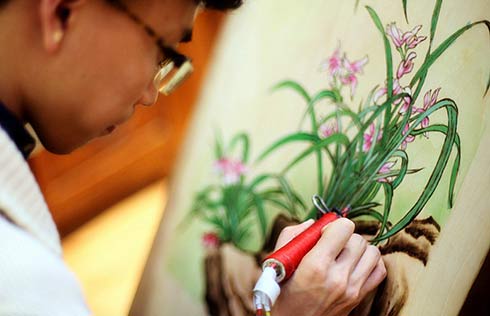 Young people continue the art of 'painting with fire'


Copyright 1995 - . All rights reserved. The content (including but not limited to text, photo, multimedia information, etc) published in this site belongs to China Daily Information Co (CDIC). Without written authorization from CDIC, such content shall not be republished or used in any form. Note: Browsers with 1024*768 or higher resolution are suggested for this site.
License for publishing multimedia online 0108263 Registration Number: 20100000002731