Life as a living doll
|
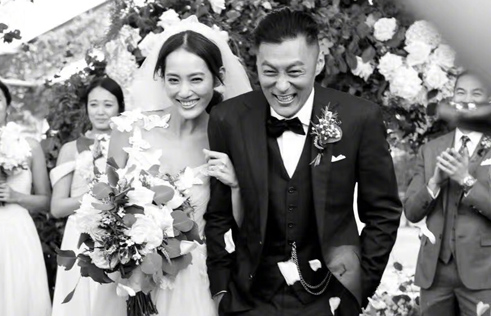
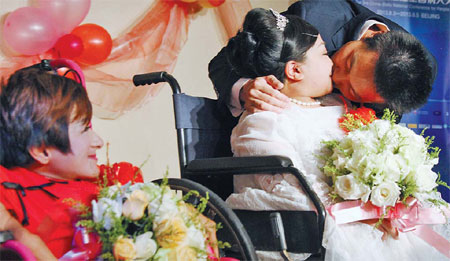
A wedding ceremony is one of the highlights for osteogenesis imperfecta patients as more than 300 sufferers gathered in Beijing on Sunday. Photos by Zhu Xingxin / China Daily |
About 100,000 people in China suffer from osteogenesis imperfecta, a genetic and inherited disorder characterized by brittle bones. Liu Zhihua finds out what life is like for sufferers of this cruel affliction. 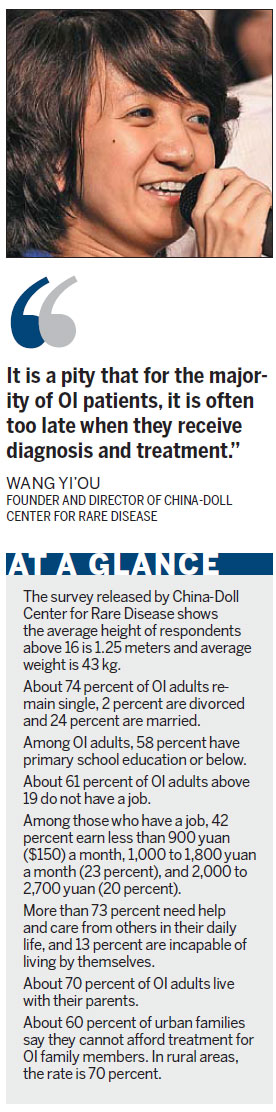
Six-year-old Wu Yulinglong, a girl from a small county in Hanzhong city, Shaanxi province, looks like a 2-year-old. Her limbs are thin and her legs are so deformed she can barely walk.
"When she was a baby, her bones just broke for no reason," says her father Wu Liang. "We dare not hold her for fear of hurting her."
The girl is one of about 100,000 "china dolls" in the country. The term is used to describe those who suffer from osteogenesis imperfecta, a genetic and inherited disorder characterized by fragile bones.
According to China-Doll Center for Rare Disease, a nongovernmental organization, 70 percent of sufferers live in less-privileged rural areas.
Their bones break easily without any specific cause, and an individual can suffer dozens to hundreds of significant fractures in a lifetime, leaving not only pain but also bone deformity.
A survey report recently released by the center shows that although situations vary, "china dolls" face similar problems in life - poor access to medical care, education and job opportunities.
"Osteogenesis imperfecta is treatable. With timely and efficient intervention, OI children can grow up healthily to live a normal life," says Wang Yi'ou, founder and director of the center, who is also an OI patient.
"But, it is a pity that for the majority of OI patients, it is often too late when they receive diagnosis and treatment."
Wu Liang says in the first two years of her life, his daughter suffered from dozens of fractures and developed deformities as she grew up.
The girl would fracture herself even while lying in bed. Local doctors were clueless about the condition.
When the girl turned 3, doctors in a hospital in Xi'an finally made a diagnosis: She became the hospital's first OI case.
But doctors told the father there was no treatment, nor hope for recovery.
The girl's deformity developed rapidly. Although she's obviously smarter than her peers, she was refused by kindergartens and schools.