Comments
  Print
Print  Mail
Mail  Large Medium Small
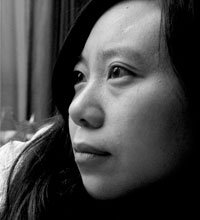
"The novel will die and should die," Chinese author Guo Xiaolu predicted at a recent panel discussion on the future of fiction writing at the Bookworm Literary Festival in Beijing.
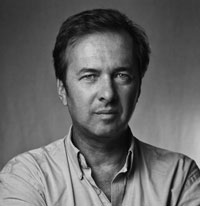
Her forthright view was, however, in stark contrast to the Spanish author of the historical novel El Imperio Eres Tu, Javier Moro, who retorted: "Nothing dies, especially the novel."
 |
|
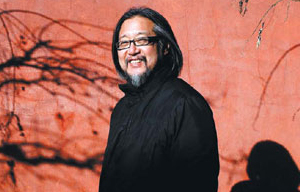
Spanish author Javier Moro and Chinese writer Guo Xiaolu have contrasting views of the future of fiction writing. Photos provided to China Daily |
Seated next to each other, the pair did agree on one thing: that writing novels has the potential to boost freedom in a new era.
There are always new ways to deal with old subjects and more room to create new ideas, the authors explained.
The new possibilities that come with today's novel writing are particularly appealing to young readers, they agreed.
Guo's novel, A Concise Chinese-English Dictionary For Lovers, was short listed for the 2007 Orange Prize. Written originally in English, it reveals a Chinese girl's bewilderment when starting her life in a foreign country.
Her use of an unfamiliar language has been controversial, but she says fiction writing should be liberating and topics need to find their most fitting mode of expression.
That's partly why she believes the novel should die, but also, she says, the novel is a commercialized, deliberately elongated form that may not carry as much weight as the space it occupies.
"Why do you have to write a 200-page novel when you can write a two-page poem?" the London-based author and filmmaker says.
"Writing is free" to show new ways to deal with text, she says, and points to the emerging practice of writing online: Readers cut and paste paragraphs to create their own science fiction, create new versions and montages and initiate discussions about them.
 |
|
Spanish author Javier Moro and Chinese writer Guo Xiaolu have contrasting views of the future of fiction writing. Photos provided to China Daily |
Moro, who has written extensively about subjects ranging from Indian politics to Portuguese dynasties, has also benefited from the new possibilities that technology offers?- most significantly, new ways to relate to readers.
"Before, you might think finishing the book is the end of it. All you have is the memory of the book," Moro says. "But now books have a longer life because of access to readers' feedback."
Ou Ning, editor-in-chief of the literary magazine Chutzpah, said he expected the future of writing to be diverse and interesting.
As a veteran digital publisher, he pointed to apps that incorporate reading with music, video and gaming, making fiction a new and interactive experience.
Ou, optimistic about new-form fiction, said he attended more than 50 book-related events around China in 2012. Most of them were filled with young people born after 1980, who have embraced fiction as an art form.
"If a book event has a poor turnout, it's not because there are few readers, it's because of bad publicity," he says.
|
|
|

Copyright 1995 - 2010 . All rights reserved. The content (including but not limited to text, photo, multimedia information, etc) published in this site belongs to China Daily Information Co (CDIC). Without written authorization from CDIC, such content shall not be republished or used in any form. Note: Browsers with 1024*768 or higher resolution are suggested for this site.
License for publishing multimedia online 0108263 Registration Number: 20100000002731