Helping them help themselves
 |
|
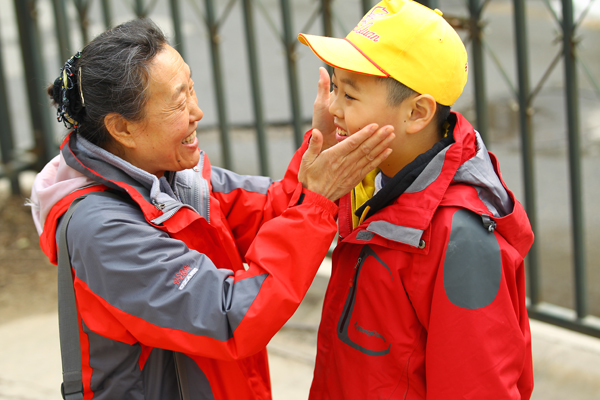
An autistic boy shares an intimate and happy moment with his teacher in Beijing's Kangnazhou center. Photos by Zou Hong/China Daily |
Wen Hong is very busy these days. The deputy secretary-general of the China Association of Persons with Psychiatric Disability and Their Relatives is busy plottingnew ways to help older autistic children.
In 2012, she and four friends, all with autistic children, founded Kangnazhou, a non-government organization that aims to provide care and life skill trainings to autistic children.
Up to the present, the organization is providing weekly baking and basic computer skill trainings to more than 20 autistic children aged 12 to 25.
"China has hundreds of institutes for pre-schoolers and school-aged autistic children, but those older than 16 have long been ignored," Wen says.
 |
| Autism stamps unveiled at UN headquarters |
Since the first official diagnosis of autism in China three decades ago, thousands of autistic children have reached to adulthood and their future looks dismal. They can no longer stay in schools or institutes for children, but there are almost no full-time care centers for them.
Most of them have no life skills, and cannot fend for themselves. Even if they are skilled, potential employers are likely to shun them for fear of trouble.
Ji Shengmin, 57, from Beijing, is sad and fearful whenever she thinks of what will happen to her 31-year-old autistic son when his parents are no longer around.
Her son was diagnosed when he was five, as after he dropped out of a special public school for the mentally challenged as a teenager, he has been at home.
For decades, both Ji and her husband sacrificed their careers so they could stay with their son as much as possible. As he grew up, however, his behavior became more disruptive and his temper got worse.
"We are getting older, and he is stronger than we are. Sometimes, he hits us," Ji says. "There are no care centers for the adult autistic, and he cannot fit into the society. I dare not think what will happen if he is left alone in the world after his father and I die."
Li Yan, a 29-year-old autism sufferer in Beijing, graduated from a special school when he is 16, and stays at home now. His mother is also very worried about his future.
Both families hope there will be public care centers for their children, especially after the parents die.
"Sixteen to 60 is the most important span of life for an individual, but for autistic people, that is the darkest time currently," Wen says. "Beijing is much better in providing services for the autistic, but even so, there are few centers for grown-ups. They have no future if we don’t take some measures."
Well-designed care centers are necessary, and if the autistic receives special skills training, perhaps then they’ll get a chance at living on their own, with dignity.
liuzhihua@chinadaily.com.cn
Related: