A limitless musical language
 |
|
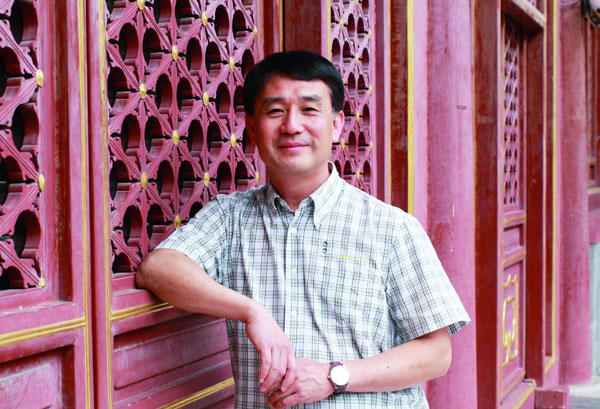
Chen Xiaoyong says he wants to find a unique musical language, "one that is both Chinese and relatable to all humans". Photo by Li Yanwen / for China Daily |
As the concert drew to an end, Chen Xiaoyong sighed with relief. An acclaimed composer based in Germany, his expectations of Beijing audiences were not high.
"I'm really delighted to have seen the audience make it to the end," he says.
For two-and-a-half hours, the concert presented seven symphonies composed by Chen and young Chinese composers tutored by him.
The Chinese influence in the music is tangible, yet not as flamboyant as the Chinese audience is used to. While some enjoyed it, many looked confused.
But that's exactly why Chen is here. Drawing on his experience in the West and the East, he is helping nurture a new generation of Chinese musicians, educators and audiences. "We are not intending to make classics through just one concert. This is a chance for us to meet the audience, for them to raise questions and build an environment that will allow the music to grow," Chen says.
Known for creating music that fuses Western and Eastern sounds, the Bach Prize winner has been commissioned to create work by prestigious organizations, including the Southwest German Radio Symphony Orchestra.
Chen has always tried to stay connected with his home country. He has served as professor for composition at the Shanghai Conservatory of Music since 2006. And he has returned to China five times in the last three months as part of a project to train teachers for the Attached Middle School of China Conservatory.
He is also involved in designing the music curriculum for Chinese schools.
"The key for the development of music in China is basic education," he says. "If the kids are not educated properly, how can we hope for the future of China's music?"
Born in 1955, Chen was among the first generation after the "cultural revolution" (1966-76) to receive a proper university education.
He studied composition at the Central Conservatory of Music in Beijing before moving to Germany to study at the Music Academy of Hamburg in 1985. There he was taught by Gyorgy Ligeti, a prominent composer.
"One of the most important lessons Ligeti taught me was: You are from a different culture, but you should not be one of the masses of avant-garde artists in the West. You are unique, and you should find your own language."
Chen's first breakthrough came in 1987 when his String Quartet No 1, a chamber piece highlighting Chinese musical elements, was publicly performed in Europe.
Soon afterwards, he was commissioned by Southwest German Radio Symphony Orchestra and as further invitations began to flood in, Chen began to think deeply about his musical direction.
"I began to wonder, is this really the music that I want to make?" he says.
As Chen settled in Germany and tried to understand the country's culture, he also strived to find the roots of European music.
"I want to find a more unique musical language, one that is both Chinese and relatable to all humans," he says.
Chen's second major breakthrough came in 1996, when he held a concert at the Hamburg State Opera. He had finally discovered a music language that he found "limitless".
"The spirit of the era, after all, is not limited by national borders or times," he says.
Chen attributes the evolution of his art to the influence of both German and Chinese culture.
"When two cultures come together, there could be rejections, there could also be questions about why you think this way and trying to understand the history and reason behind it," he says.
"Maybe I'm no longer a typical Chinese person, but I'm still rooted in Chinese culture. Both cultures can be traced in my music."
sunyuanqing@chinadaily.com.cn
| ?
 |
?
 |