When the brave were the first
 |
|
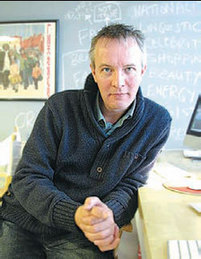
Frank Hossack has seen China change dramatically in the last two decades. |
Today, many foreigners traveling to China have their route mapped out for them.
Well into the present day, its economy attracts individuals with well-defined career aspirations and a clear image in their minds of the role China can play for them.
Earlier voyagers, however, were drawn largely by curiosity, and, in the absence of an obviously marked-out path, adapted to a culture wildly different from that of today.
One such individual is Frank Hossack, who arrived in Shanghai in 1993 to introduce Chinese pop music to Western radio.
|
 |
At this point, remarkably, only 800 foreigners lived in the city. This figure now stands at around 210,000. For Hossack, the landscape of early '90s China was in many ways incomparable with the situation today. International schools and hospitals, and places to buy Western food, were incredibly thin on the ground.
The foreign population, he says, was mostly a spread of teachers and engineers but also "consisted of senior members of large companies, who were attempting to build a presence in the Chinese market".
Other than a large diplomatic presence, which has remained relatively unchanged, the situation was much the same in Beijing. Outside of these cities, foreigners were rarely encountered.
Beyond the demographic of businessmen responding to an increasingly open Chinese market, there was also a large number of people who, in Hossack's words, embodied a kind of culture of "self-imposed exile" - foreigners who had left their home countries to escape something or someone.
The exotic notion of the Far East, and especially China, as a refuge for those fleeing something at home has a long heritage.
In the 1920s and '30s, around 20,000 Russians - many of them Jewish - fled the newly established Soviet Union and settled in Shanghai.
Today, this narrative still informs many perceptions about foreigners in China, even if most are now chasing success rather than fleeing difficulties.
Hossack currently runs a company based in Jiangsu's provincial capital Nanjing called Sinoconnexion, which provides a number of media and publishing services and has also provided several internships to students from the United Kingdom and Australia.
 |
Crucially, and in sharp contrast to the increasingly economic motivations driving foreigners in 2012, people arriving in the early '90s, in Hossack's experience, were "not looking for money, but adventure".
"I don't think that's the case anymore," he says. "It certainly was when I arrived."
Where the vast majority of Hossack's acquaintances in '90s Shanghai were "extremely colorful, eccentric individuals" - products, perhaps, of the long narrative of "self-imposed exile" that has contributed to the city's status and identity - the foreigners he meets today are different.
By and large, he points out, when it comes to foreigners in China, they are "increasingly normal people".
As China becomes an ever-more-popular destination for career-builders, the job market is becoming more competitive.
This trend has a major impact on visas, and entering China is not getting easier.
But the adventurous streak that drove foreigners East may be in the process of being pacified by economic transitions.
Today, perfectly normal people flock to China to pursue a career, which is supplemented by but not necessarily driven by adventure. But Hossack says that in the early '90s: "You wouldn't have survived if you weren't adventurous."
thomas.hale@21stcentury.com.cn