Comments()
  Print
Print  Mail
Mail  Large Medium Small
 |
|
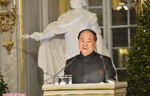
Random House chairman and CEO Markus Dohle [Photo by Mei Jia/China Daily] |
Markus Dohle, chairman and CEO of Random House, says that to fit into the global trend of digital transformation, the Chinese e-market should not get too used to low-priced content but offer e-books with a premium price that readers will buy.
While the US market started with digital content and devices, and then the premium-price segment followed naturally, the Chinese market lacks such premium content.
"The Chinese market is the one with growing importance, but its existing business mode and pattern are different from any other market we're operating in," Dohle says during his first-time visit to China in late October.
Representing a publisher that started its digital transformation 20 years ago, he was here to share his thoughts and Random's experience of digitalization with Chinese publishers. In a forum in Beijing, he concluded that the world's publishing business is halfway through a digital transformation.
"Print will always be important - no matter the percentage of profit split," he says, "while digital becomes more and more important."
"It's a perfect time to visit, because of all the buzz following Mo Yan's Nobel win," he says.
Chen Tong, vice-president of Sina, a major Chinese Web portal operator, agrees that Chinese e-book readers have not formed the habit of paying, and the content provided is also unsatisfying.
But Chen believes the future for digital publishing lies with mobile phone users, who exceed 1 billion in number.
According to Chen, online advertising, online games and mobile-phone reading are three main sectors where digital income in China comes from.
In 2011, the national reading rate of the country was 53.9 percent, and among that group, 38.6 percent read digital content.
Random House, one of the world's leading publishers of trade books, is part of the international media group Bertelsmann. It opened its first office in China in 2011. According to Dohle, the company has doubled its income in the past two years in China.
"China is an important market to us, and it also offers a great learning experience for us," Dohle says. "We'll not be in a rush, but will seek partners, learn about readers' tastes and establish a more solid foundation here."
"We'll find a place where we fit in," he says. "And digital transformation gives us an additional chance here."
Digital produces an increasing slice of Random House's global revenue. In 2008 it was 6 million euros ($7.66 million), and it's expected to reach 400 million euros in 2012.
Currently, 22 percent of its income comes from digital publishing, according to Dohle.
Dohle says he finds publishers and writers become closer with readers by being digital. And the trend is influencing publishers to turn more to social media to reach readers where they might gather.
He also advises Chinese publishers to invest in digital as early as possible, to overcome resistance to embrace digital, to remain flexible and to hold to the core, which is - and will always be - the content.
Random House expects to grow in China. In October it announced its business combining with Penguin Group to form probably the largest trade-book publisher called Penguin Random House.
"The combination of Random House and Penguin increases our presence in the target growth markets of Brazil, India and China," Bertelsmann Chairman and CEO Thomas Rabe comments.
meijia@chinadaily.com.cn



Copyright 1995 - 2010 . All rights reserved. The content (including but not limited to text, photo, multimedia information, etc) published in this site belongs to China Daily Information Co (CDIC). Without written authorization from CDIC, such content shall not be republished or used in any form. Note: Browsers with 1024*768 or higher resolution are suggested for this site.
License for publishing multimedia online 0108263 Registration Number: 20100000002731