River of mystery
Updated: 2012-02-13 11:21
By Jofelle P. Tesorio (China Daily)
|
|||||||||


 |
|
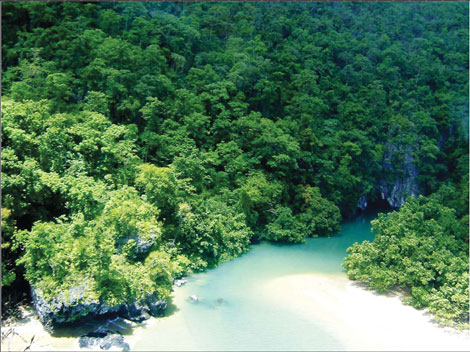
The Underground River in Puerto Princesa is now one of the New 7 Wonders in the World. Photos provided to China Daily |
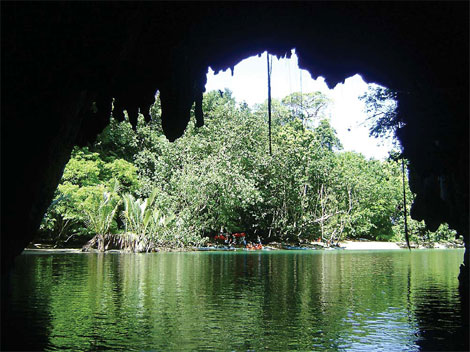 |
| The tranquil river and its banks were long a favorite picnic spot for the locals. |
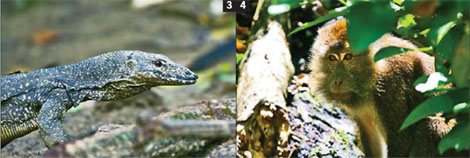 |
| Unique flora and fauna have always been part of the attraction, including the monitor lizards and monkeys that seem more curious than fearful of visitors. |
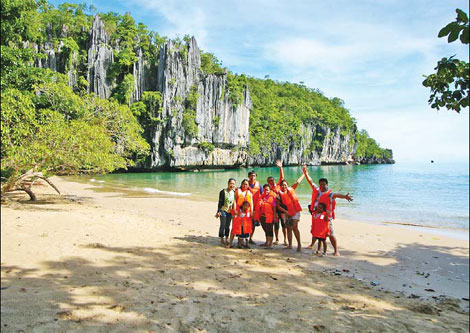 |
| A day out at the Underground River puts you in touch with nature, and the friendliness of its people. |
The Underground River in the Philippines' Puerto Princesa City was recently named one of the New 7 Wonders of Nature. Jofelle P. Tesorio says it has to be explored now, before it becomes another crowded touristy attraction.
It is hard to visualize a deep river flowing beneath an expansive cave network. And mention a Philippine cave and it will instantly conjure a picture from TV's Survivor series, where competitors crawl on slippery stones amidst complete darkness and eerie sounds of bat calls. Fired up by these images, most visitors to the Philippines' Underground River are often confused about what to expect and what to do. It's a lot more complicated than imagining Vietnam's Halong Bay with its junks and coastal villages, or the giant lizards roaming free around Indonesia's Komodo Island.
Thanks to an online poll by a Zurich-based foundation, the mysterious river is no longer underground. With its new standing as one of the 7 New Wonders for Nature, the Underground River is expected to become the jewel in the crown of Philippine tourism.
The other "new wonders" are the Amazon, Halong Bay, the Iguazu Falls on the borders of Argentina and Brazil, Jeju Island in South Korea, Komodo National Park in Indonesia, and Table Mountain in South Africa.
For many years, the Underground River was only popular among local tourists and a few adventurous Westerners.
But thanks to the 7 Wonders contest and vigorous promotion by tourism officials, the Underground River is now the most famous attraction of Puerto Princesa City, the capital of Palawan, an island-province southwest of Manila. The river is 24 kilometers long but only about 8.2 km can be navigated by visitors.
Palawan, often described as the country's last ecological frontier, is a tourist magnet because of its pristine beaches, dive sites and rainforests.
As the child of a hardcore first-generation tour guide in Puerto Princesa, I have seen the rare beauty of the Underground River even before boatloads of tourists came to conquer.
Tagging along with my mother, I sailed gigantic waves, traveled the craggy undeveloped third-world roads, overcame fear of darkness, befriended park rangers and even monkeys and monitor lizards around the area.
Now, going to the Underground River is much easier.
For $30, the day tour includes transfers with air-conditioned van, permit to enter the park, packed lunch, drinks, snacks and a licensed guide.
The trip starts at 8 am when guests are picked up from their hotels. Less than two hours of driving down picturesque coastlines, forests and farms (with water buffaloes frolicking in the mud), the van stops at the port of Sabang, where motorized boats are docked at the end of the 5-km-long sandy beach.
There are also high-end hotels as well as affordable huts in Sabang beach for out-of-towners who want to commune with nature.
While waiting to board the boat, stalls selling souvenirs and native products are the usual distraction. Sellers make their usual pitch but not to the point of being annoying. Their products range from the usual 'I've Been Here' shirt to cashew-nut brittle, a famous Palawan delicacy.
Once you're afloat, trust that this will be the best 15-minute boat-ride of your life.
Against the blue sky and calm seas, the stretch of beach lined with native huts and coconut trees gets left behind as you come closer to the rugged limestone cliffs and small lagoons.
The boat then stops at another beach. Monitor lizards and monkeys roam around the area as they carefully mingle with tourists. They are harmless as they are used to humans, but the monkeys are also known to grab everything from you when you least expect it. Cameras and other valuables must be kept close and food must be guarded.
Our tour guide leads us to the small pier at the mouth of the cave.
The boatmen, in their khaki shorts and white shirts, wait attentively, smile and greet visitors good morning.
The small boats can only accommodate 6 to 8 people at once, and officials control overcrowding by requiring visitors to purchase one of the limited number of permits.
The adventure starts as soon as everyone gets an orange life jacket and hard hat.
Sit back, relax and leave everything to the boatman, who will explain the scientific and geological significance of the Underground River in layman's language and entertaining stories. Many tourists forget what they see inside but the boatmen's adlibs often stick.
But what makes this cave different is the river flowing beneath, accessible only by a small paddle boat through a tiny opening, which gets even smaller during high tide.
Its most interesting features are the stalagmites and stalactites formed like vegetable gardens, a church cathedral (with the Holy Family and saints), and a naked woman (referred to as 'Sharon Stone' by boatmen) as if they were carved by sculptors.
Before reaching the towering cathedral, we traverse a few hundred meters of tunnel-like passageway, so narrow that it gives an impression of being inside a long water tank.
Considered one of the largest cave complexes in eastern Asia, the Underground River is just part of the tropical coastal karst, consisting of towers, cones, huge depressions and large caves.
A 2011 scientific report says the karst is a product of a long evolution which can be traced from the Pliocene period to present.
There are more than 800 plant species, 65 bird species (out of 252 identified in Palawan), some 30 mammal species, and 19 species of reptiles within the 22,202-hectare terrestrial reservation where the karst lies.
Because of its unique and outstanding scientific, biological, and geological features, it was declared a UNESCO World Heritage Site in 1999 and a National Geological Monument in 2003.
The official website of the Underground River says "there is no existing document that shows who or when it was first discovered, but it is believed that the island's early inhabitants were the first to know of its existence, but their fear of spirits they believed inhabited the caves prevented them from exploring the depths".
The 45-minute paddle tour inside the cave always seems like eternity. It is always a relief the moment you see light and hear the sound of birds (not bats) from the outside world. But after experiencing the Underground River, you will realize that miracles do happen and nature is the world's best architect.