Finding divine fortune in the Chinese New Year
Updated: 2012-02-07 11:10
By Xu Junqian and Xie Yu (China Daily)
|
|||||||||


 |
|
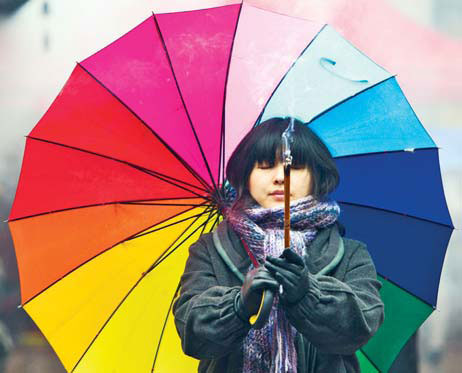
A visitor burns incense sticks at Jing'an Temple in Shanghai. Gao Erqiang / China Daily |
SHANGHAI - Wen Wei performs his final bow to a 4-meter-high wooden Buddha statue in the west wing of Jing'an Temple on the last day of Spring Festival. It takes him around an hour to complete the ceremony.
He puts his palms together - clutching three incense sticks - raises them to his forehead and bows to each of the temple's four sides.
"The kowtows should be toward the dominant deity facing south first and then move clockwise toward every side," the 28-year-old Shanghai high school physics teacher says.
"You can't miss or mess up a single step."
Worshiping at the temple during Spring Festival has been an annual rite for Wen and his wife since the couple encountered "insoluble problems" in their teaching careers three years ago.
"Wishes you make here come true," Wen says. "Then you return to thank Buddha and make another wish. That's how it becomes a routine."
Buddhist temples in Shanghai and throughout the country see droves of worshipers arrive during the Spring Festival, especially on Lunar New Year's Eve. Visitors stay up into the wee hours, in the cold and darkness, to be the first in line to burn incense and offer prayers during the Lunar New Year.
"They come to pray for good health, parents, kids, jobs, relationships - almost everything," says a monk at the Jing'an Temple, who only gives his surname, Long.
Admission to the 1,700-year-old temple, one of Shanghai's most ancient and biggest, soars from 20 yuan ($3) to 100 yuan during the first 15 days of the Lunar New Year. The holy site received 40,000-50,000 people a day during the holiday.
Long, a Jiangsu province native who transferred from a Beijing temple two years ago, says he finds the differences between temples in the North and South "interesting".
"The North attaches more importance to scholarly studies, while the South is more practical and more open to the public," he says.
But he doesn't believe that one way is better than the other.
The southern model boosts worshipers' confidence, he believes.
In Zhejiang - the province that's home to the most entrepreneurs - temples with vermilion pillars and upturned eaves host surges of business suits.
Xu Zhigang, a trader from neighboring Yuhang county, has visited Lingyin Temple - one of the country's most ancient and celebrated holy sites - during the Spring Festival in Zhejiang's provincial capital Hangzhou since he started his business several years ago.
"It's a must for business people," Xu says.
He and three fellow businesspeople drove half an hour to reach the temple and then lined up for an hour to get in.
Wang Min, the shopkeeper of a small candle and incense store near Lingyin, says sales triple during the holiday. "When it comes to things like this, everyone - businesspeople or blue-collar workers, young or elderly - becomes generous," Wang says.