Healthy eating starts with red
Updated: 2011-07-12 18:35
By Cindy Gu (chinadaily.com.cn)
|
|||||||||


Everything exists for a reason. That goes for most things in life, and the color of our foods is no exception. So, have you ever wondered why our foods have colors? What do these colors do?
The pigments in fruits and vegetables do have a purpose. For one, the bright hues attract animals that help with seed dispersion. Second, in photosynthetic tissues, they convert solar energy into something "edible" in the plant. Moreover, the pigments act as a natural sunscreen to absorb harmful UV rays and to protect the plant.
Eating a variety of colorful fruits and vegetables is good for you. Your dinner plate should be a feast of colors, not just a bland monochrome. Foods can come in all colors imaginable, and today, let's turn the spotlight on the color red.
Tomato
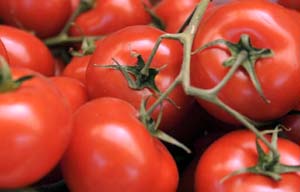
The redness in tomatoes comes from a naturally occurring pigment called lycopene. It is a member of the carotene family, a group of photosynthetic substances that convert sunlight into sugars that plants can utilize. Lycopene is not an essential nutrient for humans, but we eat plenty of it, mostly in tomato-based dishes.
Lycopene is a potent antioxidant. Antioxidants remove the free radicals that come from stress or UV exposure. Lycopene has also been shown to have anti-carcinogenic properties. For the beauty-conscious individual, lycopene can also slow down the process of aging and prevent loss of skin elasticity and discoloration.
Lycopene is best absorbed with a little bit of fat. Tomato soup, pasta pomodoro and tomato salad with extra virgin olive oil are all excellent choices.
Watermelon

Practically a staple fruit in the summer, watermelons are delicious, nutritious and affordable. It is more than 90% water by weight and a significant source of Vitamin C.
The redness of the fruit also comes from lycopene, but it is also a significant source of beta-carotene. It is mildly diuretic, so consumption in large quantities is not highly recommended.
The flesh of watermelons is best consumed as is. The rinds (the whites close to the skin) are also edible. They are sometimes stir-fried or stewed in Chinese dishes, but the most common way to prepare rinds is to pickle them. Simply slice the rinds, then add some salt, sugar and a few drops of sesame oil.