Living and Values - The Important Days of the Chinese
Traditional festivals are important events in the life of every Chinese, beginning right from childhood. Festivals such as the Chinese New Year, the Dragon Boat Festival, the Mid-Autumn Festival, and the Winter Solstice are more or less evenly distributed across the four seasons. In China's traditional agricultural society, festivals served to mark the passing of time.
 |
All Chinese festivals include common elements such as a desire for happiness and well-being, the warding off of misfortune, experiencing a connection between man and heaven, and family reunion. And, of course, Festivals are an opportunity for rest and relaxation. The Chinese are hard workers, so festivals and celebrations are a welcome chance for a change of pace. During China's traditional agricultural society, festivals were even national holidays.
The rhythm of China's traditional festivals was set by the sowing and reaping of crops. The Chinese New Year comes in winter when farmers are unable to work in the fields. The Lantern Festival ends the Chinese New Year season. Tomb-Sweeping Day, which is a day to pay respect to the deceased, comes between spring plowing and summer weeding. The Dragon Boat Festival is held after one of the harvests of the year is completed. The Chung Yuan Festival (to remove the guilt incurred by the sins of the dead) occurs in the middle of summer when not much work in the fields can be done because it is so hot. The Mid-Autumn Festival is held around the final harvest of the year. The Double Ninth or Senior Citizens' Festival occurs as farmers prepare for the coming winter. And the Tung Chih festival falls on or around winter solstice.
The Chinese New Year is also know as the Spring Festival. This is a time for family members to come together to "Guo Nian" or pass into the new year. Money in little red envelopes are given to children for good fortune. Homage is also paid to ancestors and gods. Firecrackers are set off everywhere, and dragon and lion dances are performed from the busiest cities to the most remote villages.
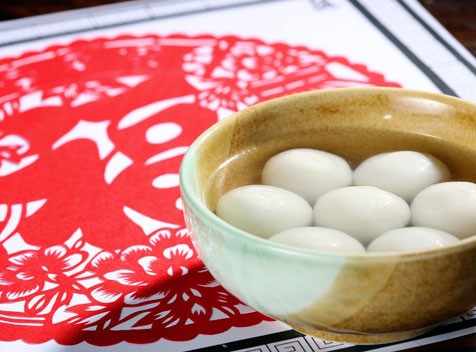
The Lantern Festival has been celebrated since the Han Dynasty (206 B.C.-221 A.D.). During this festival, everyone carries colorful lanterns and gathers in a public place to have a lantern fair. It is also a time to eat glutinous rice dumplings which symbolize family unity.
The Dragon Boat Festival commemorates the date that an ancient poet and patriot committed suicide by jumping into the Milou River after losing the trust of the emperor. Because of this, the festival is also called Poet's Festival. According to the legend, people then launched boats to find his body and give it a proper burial. However, they could not find it. Then, the people threw rice dumplings into the river to satisfy the hunger of the sea creatures, so that the poet's body would not be mutilated. That is the origin of the dragon boat races and the eating of glutinous rice dumplings, which consists of sticky rice wrapped in bamboo leaves.
The Mid-Autumn Festival is a day to worship the moon god. It is also the birthday of the earth god. The Chinese use this opportunity to express their gratitude to heaven and earth (represented by moon and earth respectively) for the blessing they have enjoyed. Round moon cakes are eaten on this day and are also symbolic of family unity. Unlike most other festivals, the Mid-Autumn Festival is characterized by serenity and delicacy.
The lifestyles of the Chinese people have changed, but the importance of traditional festivals in their lives has not faded. Along with these major festivals, many other traditional festivals are observed in modern China that demonstrate the important place that tradition and longing for times past occupy in the life of the Chinese people. Besides the ethnic, geographic, historic, and linguistic ties that unite the Chinese, traditional festivals are one of the strongest bonds reinforcing the cultural identity of the Chinese.