Lunar new year gains in status

I always like to send my wishes to friends on their birthdays, as our birthday is the only day out of 365 that belongs to us in a very special way. My Western friends used to ask me, "Could you check what my Chinese sign is?" or "I was told I'm a Horse, what are the features of that zodiac sign in China?"
Through the 20 years I have spent in China, I have seen a growing interest among Western people for the Chinese 12-year cycle, each year attributed to an animal, for chunjie which is the Chinese lunar new year's day, and for all kinds of symbols and activities related to the Chinese zodiac system. Among those details are the red fabric belt that one wears during benmingnian (or the year of "your animal"), the story of why these animals were chosen and why in "this order", the reason why the Chinese pay so much importance to the year of a person's birth and the way to ask a person's age in Chinese, and the long noodles that one should not miss on a birthday for a long life.
There are paper cuts, too, featuring the 12 animals, so light and easy to include into a letter that I have sent more than 200 around the world during my time in China.
The Chinese lunar new year is now celebrated in many countries that have a Chinese community, and foreign TV show anchors do not miss the opportunity to offer their best wishes.
Several countries, including Canada, have started producing special postage stamps for the Chinese new year. Some of my friends send them to me and ask questions about the pattern or some elements that they don't understand. It seems that the world is becoming increasingly interested in Chinese culture.
Japan, South Korea, Mongolia, Vietnam and other Asian countries have a 12-animal calendar which may differ a little from the Chinese calendar. For instance, the rabbit may be replaced with the cat. The Dai, one of the ethnic groups in China, include the elephant in their calendar. But Western people generally call them all the "Chinese calendar".
The Chinese zodiac has long been used to predict a person's future and character. Sometimes, I am asked whether Chinese people really believe in the influence of a specific animal on their child's life, but in all cultures and religions, symbols and practices exist that people follow without necessarily believing in them. For instance, persons born in the Year of the Rabbit are said to be "virtuous, conscientious and well organized". The rabbit has a symbolic value in the West, too because of its fertility. It symbolizes prosperity.
Even in today's China, matrimonial arrangements are often based on the compatibility between the signs of a couple. Parents may ask an astrologer to examine the "sky map" (or horoscope) of the would-be brides and grooms in a way to bring happiness into their married life. Specific knowledge is required to interpret the "sky map" and calculate the celestial or heavenly stems, the earthly branches, the yin and yang, and the five elements (fire, earth, metal, water and wood).
For instance, people used to assume that children born in the Year of the Monkey would be clever, supple and passionate, and the Year of the Goat was "not" good for girls to be born in. So, fewer births were recorded in the Year of the Goat and the following year (of the monkey) used to see a baby boom. But after social changes and improvement in education levels, many people prefer to see the zodiac signs as fun rather than determining factors of a person's fate.
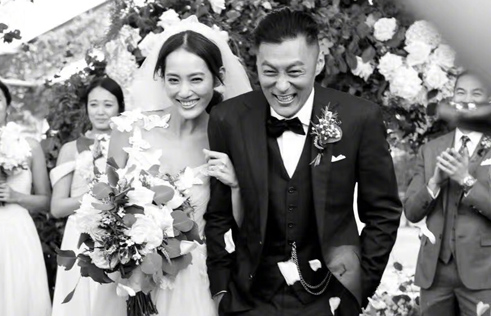
Fengshui is another Chinese cultural phenomenon. It is not recognized officially but many people - even in the West - tend to believe in it. Globalization has not been one-way traffic. If more people in the West today believe in the Chinese zodiac and fengshui, an increasingly number of Chinese today celebrate Christmas and the Halloween, and Chinese women wear white wedding gowns.
Such cultural interaction is because of the high status that China enjoys in today's world thanks to its fast and energetic economic development. Globalization is unavoidable so it's natural for cultural exchanges to be more intensive.
It is reported that 40 million non-Chinese people are learning the Chinese language across the world. And I think the number of people interested in China and its culture will increase steadily.
The author is a freelance writer based in Beijing.
(China Daily 02/10/2011 page9)