Fighting fat
By Chitralekha Basu (China Daily)
Updated: 2010-09-29 09:27
 |
Large Medium Small |
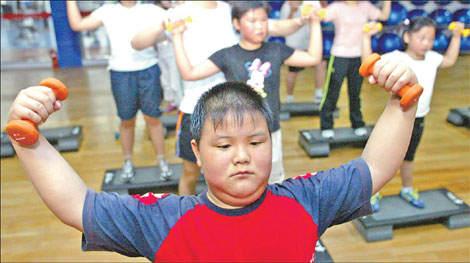
Child obesity can only be addressed through lifestyle changes. Chitralekha Basu reports
Approximately 10 million city residents in China are growing obese every year. In five years, an estimated 15 percent of the total population will be overweight.
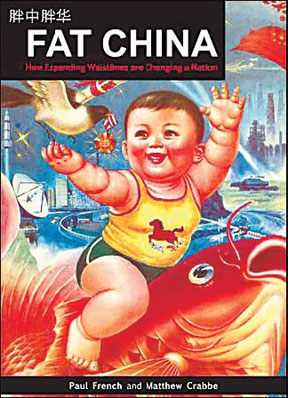
These and other alarming statistics were revealed in the recently published Fat China: How Expanding Waistlines are Changing a Nation, co-authored by Paul French and Matthew Crabbe.
The book is based on exhaustive countrywide research conducted by the Shanghai-based Access Asia and highlights not only the nation's increasing obesity but also concerns about the costs of this growing trend. China's youth are particularly under threat, according to Fat China. Often the pampered recipients of the attention from six grown-ups (parents and two sets of grandparents), China's young generation are encouraged to eat more, and more unhealthily, than is good for them.
"Obesity among young people deserves more attention," says Dr Xu Yuan, professor and chief physician, diabetes department of TCM, China-Japan Friendship Hospital in Beijing. "Obesity controlled at a young age will help control metabolic disorders and ultimately cerebro-vascular disease and angio-cardiopathy."
The inevitable fallouts of obesity, such as high blood pressure, coronary heart disease, fatty liver, arteriosclerosis and tumors, don't usually manifest themselves till the ages of 40 or 50.
"The Chinese government attaches great importance to national health, especially for children and youth," says Zhao Wenhua, executive deputy director of the National Center for Chronic and Non-communicable Disease Control and Prevention, under the Chinese Center for Disease Control and Prevention.
 |
|
The recently published Fat China, co-authored by Paul French and Matthew Crabbe, reveals alarming statistics. |
Parents of young and growing children have a huge responsibility in fighting the battle of the bulge, she adds.
However, it is important that children lose excess weight in a scientific and healthy way, says Dr Xu Yuan with China-Japan Friendship Hospital.
"It is a metabolism-related problem, which cannot be fixed by popping a few pills."
TCM practitioners like Dr Xu insist on prescribing a diet and exercise regimen in keeping with the patient's constitution.
"There is no panacea to treat obesity," she says.
Unfortunately, a quick fix is exactly what most young people wishing to shed their excess fat are looking for.
Procedures like liposuction, gastric banding and wearing dehydrating patches are in high demand by people looking for instant results.
"Surgery can only improve one's figure, not help one lose weight," says Li Bi, director of the department of plastic surgery at Peking University Third Hospital.
"Even if one has a whole-body liposuction, one might only lose 5 to 7.5 kg. Liposuction surgery mainly helps reduce subcutaneous fat, but obese people have other kinds of fat as well.
"Therefore, to lose weight one needs to combine liposuction with endocrine adjustment and diet adjustment."
And going under the surgeon's scalpel is not risk free.
"Such surgery entails massive loss of body fluids, which might lead to complicated diseases. Using more anesthetic than needed or losing excess body fluid can cause death," Li says.
"Losing weight," says Chang Cuiqing, vice-secretary general of the Chinese Nutrition Society, "is actually about adjusting one's lifestyle."
While there is no standard diet and workout schedule, certain general rules apply to almost everyone.
"The key lies in reasonable food combinations, which means putting a plate representing diverse food on the table," says Chang. "Vegetables and milk should be consumed every day. The intake of animal fat, especially pork and edible oil, should be controlled.
"Obese children should avoid all kinds of ham and sausages, drink less beverages containing sugar, such as colas, and finally, exercise for at least an hour a day."
She cautions against making drastic changes in one's food habits though.
"Switching from an unhealthy to healthy diet is usually a long-term commitment, which ought to take about 10 months," Chang says. "If one is overweight by 20 kg, I would suggest losing 2 kg per month."
Chang recommends activities like jogging, playing basketball, football and swimming for kids as these entail full-body movement. Joining a summer camp, she says, is a good idea, as kids get to exercise under expert guidance (see side bar).
"The problem is to maintain the weight loss once the camp is over. If they do not follow what they learnt at the camp, the children will probably get much fatter than before," she says.
She adds that kids tend to put on weight only when parents are not looking.
"Parents should take an active role in supervising their kids' lifestyles."
Chen Xiaorong of the National Center for Chronic and Non-communicable Disease Control and Prevention agrees.
"Parents should set an example by eating a healthy, balanced diet. Otherwise, it will be difficult to make children do it," she says.
She says that ideally parents should engage in physical activity and encourage their children to join them.
"It's also important to talk to children, to ensure good physical and mental health," she says.
Info
Nutrition for kids
1. Breakfast: This should consist of at least three kinds of food: cereal, an egg or some meat, fresh vegetables or fruit (essential). A few slices of bread with cheese (optional). Cut down on beverages with a high sugar content as it will kill the appetite for staple food or whole grains. Decrease the intake of such beverages by a third, to start with.
2. Lunch: Some lean meat and fresh vegetables.
3. Supper: This should be mainly vegetable protein-based. Meat is best avoided at supper. Beans are a good choice. Milk or dairy products (optional).
Options:
Breakfast:
Plan A) Vegetable porridge and an egg. Add the child's favorite vegetables to the porridge, a little salt but no oil.
Plan B) A boiled egg and two slices of toast. A sliced cucumber and tomato. A cup of yogurt.
Plan C) A bowl of cereal with milk. A boiled egg. A plate of vegetables, such as carrots, or fruits.
Lunch:
Most kids have lunch at school. It's best to avoid vegetable soup as it contains a lot of oil. Do not eat chicken skin.
Supper:
Grain porridge, made with mung and/or other beans, besides raisins, lotus and lily seeds. The ratio of grains and rice should ideally be 1:5. Pour enough water in the beginning. Don't add any later. Vegetable protein such as tofu and shredded dried tofu are also recommended. If the child loves minced meat, keep the ratio of vegetable and meat at 1:1.
Xu Lin contributed to the story