Call of the wild
By Yang Guang (China Daily)
Updated: 2010-01-22 08:49
 |
Large Medium Small |
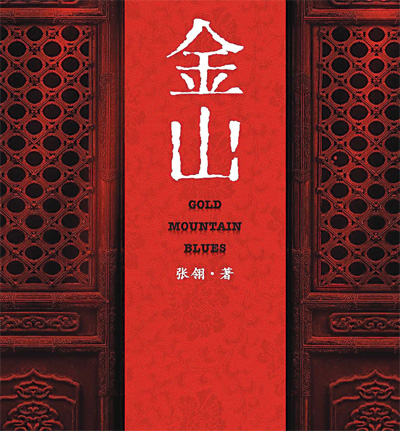
Toronto-based writer realizes a long cherished dream to write about the Chinese immigrants who went to mine gold in the Rocky Mountains. Yang Guang reports
The mossy tombstones, scattered amid knee-high grass on the outskirts of Calgary, Canada, haunted Toronto-based writer Zhang Ling for more than two decades.
For 22 years, Zhang had struggled to write a story about those nameless tomb owners.
She finally found respite one snowy afternoon in December 2008. Around Christmas, "I felt a kind of peace that I have not known for a long while," Zhang, 53, recalls.
"I knew I had accomplished a mission - I had given voice to a group of people buried in the dark abyss of ambiguity for more than a century, silent and forgotten."
These "silent and forgotten" people are the Chinese laborers who, in the late 19th and early 20th century, went from the villages of southern China to the "Gold Mountain", or the wilderness of the Rocky Mountains, to help private prospectors mine gold.
In Gold Mountain Blues (), Zhang traces the story of five generations of the Fang family, from the 1860s to the present. It is not just a family epic, Zhang says, and explains that she has tried to incorporate "stories of people who braved the ocean to come to a wild land to pursue dreams of wealth and prosperity that quickly eluded them and stories of a lengthy journey of two races finally becoming reconciled after a century of distrust and rejection".

Historical events form not just the background to the stories but more dramatically, are intertwined with the fortunes of each individual - whether it is the building of the Canadian Pacific Railway in the 1870s and 1880s, the 1898 Hundred Days' Reform of the Qing Dynasty (1644-1911), the War of Resistance Against Japanese Aggression (1937-45), or agrarian reform in the 1950s. Professor David Chuenyan Lai of Canada's University of Victoria, calls it "history in the form of story".
But cutting through the rock-hard crust of history was not easy. Zhang visited countless universities and public libraries and archives, and traveled regularly to Victoria, Vancouver, and Kaiping county in South China's Guangdong province, for her book.
"I am obsessed with the accuracy of historical facts and details," she confesses. "To find out about a particular style of camera used in the 1910s, for example, I would surf the Net for nights, for just a brief two sentences in my book."
But the efforts have paid off. Last year, the book won her China's first Overseas Chinese Literary Award. Following its debut at the 2009 Frankfurt Book Fair, it will soon be published in English, French, Italian, Dutch, German, Spanish and Greek.
Embarking on her writing career in the mid-1990s, Zhang has bagged a number of literary prizes, including the October Literary Award in 2000 and 2007.
Her work on Gold Mountain Blues is tantamount to a literary "marathon", considering the great distances she has covered in her research.
A native of Wenzhou, Zhejiang province, Zhang worked as an English translator at a government department before leaving in 1986 to pursue her MA in English at the University of Calgary, and a second MA in hearing disabilities at the University of Cincinnati, in the United States.
Life was hard in her first decade in a foreign land. She took on a variety of jobs for a living - translator, teacher, secretary, and even hotdog seller.
Writing is the outlet for her emotions. "If you see a woman smoldering on a Toronto subway train," she once told a friend, "it's me; if I don't write, I might explode."
Zhang has so far published four novels, three collections of novellas and short stories, and most recently a six-volume anthology, while keeping her day job as an audiologist.
She prefers being a part-time writer, because "neither being too poor nor too rich offers the right mood for writing". She says being away from home gives her the perspective to examine China and its history, and discover something new.
For her, Gold Mountain Blues "is the outburst of strength accumulated over the years". She is not sure whether she will be able to produce a better book in future. "It's impossible for a writer to come up with a breakthrough in each new work," she says, "but I'm waiting for a pleasant surprise; so are my readers, I believe."
Zhang is now working on Sleep, Flo, Sleep, a novel that draws on material she collected for Gold Mountain Blues. She plans to travel to the China-Myanmar border in Yunnan province this year, to prepare for her next novel on the China Expedition Army.