Ruyi, as you wish
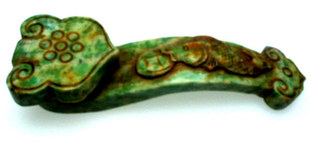
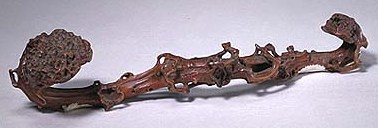
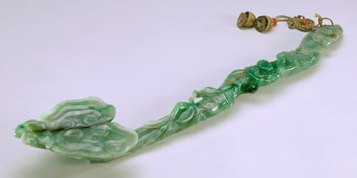
Visitors to Beijing's Forbidden City will notice a valuable exhibit called ruyi (formerly spelt as juyi) with a head like a shred of cloud and a long body or handle in the shape of a flat S. It may be made of any of a wide range of valuable materials: gold, jade, jadeite, crystal, agate, coral, agolloch eaglewood, bamboo, bone and what not. And the workmanship is often quite meticulous: it is carved with patterns in incision, low-relief or openwork and sometimes inlaid with silver, gold and gems. The designs may be simple or very elaborate but invariably convey messages of good wishes, such as "pine and crane" (standing for vigorous old age), "immortals wishing you longevity", "phoenix and peony" (standing for wealth, happiness and prosperity), and the like.
 |
|
|
The ruyi, it is said, was born out of a common Chinese article of household use- the itch-cratcher. This is a stick about 1.5 feet long, with one end in the form of a miniature hand with bent fingers. Holding it, a man can scratch the itches on his own back and thus get a feeling of well-being. It is still used by some people in China today. Usually made of commonplace wood or bamboo, it is popularly called by the descriptive name laotoule ("old man's joy").
 |
|
|
The itch-scratcher, being a joy, began to be made of more valuable materials for those who could afford it. But apart from being an art object, it continued to be used for its original purpose until sometime during the Qing Dynasty (1644-1911). It gradually became a pure ornamental object called ruyi ("as you wish"). The right place for the elevated and transformed itch-scratcher was now on the bedside table of the imperial sleeping chamber, by the side of the throne to be appreciated daily by the emperor and his numerous wives. On every occasion of court celebrations, such as enthronement, royal wedding or birthday, the nobles and courtiers would be busy raising money and ordering whole sets of ruyi for presentation. On the 60th birthday of Emperor Qianlong (1700), for instance, the ministers presented to him 60 ruyi of gold filigree. Likewise, on the 60th birthday of the Empress Dowager Cixi (1894), she got 9 times 9 or 81 ruyi. (The number 9 X 9 symbolizes infinity or an endless long life.) The ruyi was also used by the emperor, when he chose a concubine out of a number of candidates, to point at the one catching his fancy.
 |
|
|
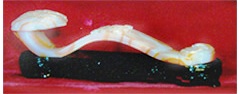
The presentation of ruyi was not a one-way affair: it was often bestowed by the emperor upon his ministers or subjects. There is still a valuable collection of them in the Mansion of Confucius in Qufu, Shandong. They were given by various emperors to the descendants of the great sage.
 |
|
|
It is still difficult to pinpoint the time of the first emergence of the ruyi, although no archaeological finds of them date from before the Qing Dynasty. They are much valued but commonly seen objects of decoration in the old Qing palaces, but outside of Beijing one rarely comes across them in provincial museums.??