At the recent powwow of the nation's top advisory body, some cultural elites proposed to add the teaching of fanti characters to the curriculum of elementary schools. In a related case, a Hong Kong representative said the Special Administrative Region should promote the use of jian-ti characters.
"Fanti" and "jianti" are Chinese for "traditional characters" and "simplified characters", respectively. The former is used in Hong Kong, Taiwan and some overseas Chinese communities, while the latter is a simplified version of the former introduced on the Chinese mainland, after New China was founded.
The dueling for supremacy between the two writing systems often sparks controversy. Which one is better? Should one system accommodate the other? If you resist the temptation to politicize the debate, the answer is by no means elusive or complicated: Jianti is easier to learn because many characters have simpler forms; fanti looks better if you practice calligraphy or traditional painting.
Sadly, there are people who cannot help treating it as a manifestation of political clout - a kind of mainland versus overseas wrestling for soft power. The thinking goes along the lines that if you support the mainland, you should automatically prefer jianti, and vice versa.
Then, there are those who approach the issue from a practical standpoint. Detractors of jianti argue that the need to simplify the strokes no longer exists as handwriting is fast giving way to typing on a computer, which requires only recognition of a sound-based input. Opponents of fanti, on the other hand, contend that you don't have to know fanti to read all the classics, as they are often available in jianti format.
The standoff between the two camps is not as extensive as it appears to be. By one count, of the 2,000 most common Chinese characters, 1,369 share the same forms; out of the 631 with different strokes, only 178 characters need special memorization as the rest are simplified at the root form and are applied systematically.
In other words, it isn't troublesome for a mainlander to catch up on fanti, and it takes even less time for a fanti reader to familiarize himself with the less demanding jianti. Writing can be trickier than recognition. When I was editor for a US-based Chinese journal, I had to constantly toggle between jianti and fanti.
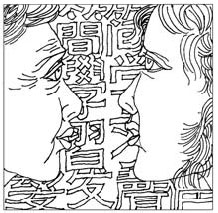
The obstacles are the few words for one form that do not correspond to the other. For example, the fanti "fa" in toufa (hair) is different from "fa" in facai (be rich), but the jianti character is the same. A computer program can't help you, and you need to edit each occurrence manually.
Personally, I feel fanti is more beautiful as the ideogram is closer to the original picture. I'm no calligrapher, but reading fanti enhances my appreciation of my native language, as it is written. That, however, raises the bar for literacy as it takes more effort to learn the extra strokes. Jianti, though standardized in the 1950s, can be traced back hundreds of years to the cursive form of handwriting and, some, to Japanese Kanji.
Most people, including natives, learn Chinese for practical reasons. They don't intend to become linguists or historians. Therefore, there should be a balance between the ease of learning for the maximum number of people and the preservation of the language as a cultural legacy. If you go to one extreme and keep everything intact, many new learners would be intimidated; if you cut down too much, the language may lose too much texture and visual richness.
The best option, as I see it, is for users of each form to learn to read the other. You can do it in the time you defend the form you're born with.
E-mail: raymondzhou@chinadaily.com.cn
(China Daily 03/22/2008 page4)