
中國網(wǎng)站品牌欄目(頻道)
This is the VOA Special English Technology Report.
Last Wednesday, June 8th, was World IPv6 Day -- the first major deployment of Internet Protocol version 6. Hundreds of Internet service providers and Web companies tested IPv6 on their websites.
This new numbering system for Internet addresses has been available for years. But very few companies have switched to it. Yet the old system could run out of addresses this year because of all the growth in online devices. Doug Szajda, a computer science professor at the University of Richmond in Virginia, explains.
DOUG SZAJDA: "It's sort of like the post office of the Internet. It tells you how to get information from one computer to another. Currently, and since around 1980, the addressing system has been IP version 4. But the problem with that is that we've run out of addresses. So it's almost as if, when a new house is built, you can't give it an address because you don't have any more."
IPv4 was designed to handle just over four billion IP addresses. Doug Szajda says that seemed like more than enough.
DOUG SZAJDA: "At the time that IP version 4 was designed, the designers were anticipating perhaps thousands of users of the Internet someday, and certainly thinking that four billion addresses was many more than we would ever need."
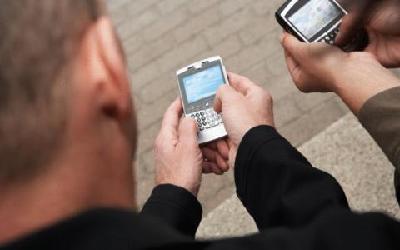
Yet now, not just computers but smartphones, cars, televisions, game systems and plenty of other devices all connect to the Internet. Each uses a different IP address.
The basic standards for IPv6 were first published in 1998. Doug Szajda says its most important feature is the ability to provide what seems like an unlimited number of IP addresses. Well, there is a limit -- 340 trillion trillion trillion in fact, or 340 undecillion. That's 340 followed by 36 zeros.
Experts say the challenge now is to get the world to use it. Mr. Szajda says that was the real purpose of last week's World IPv6 Day sponsored by the Internet Society.
DOUG SZAJDA: "It was less a worldwide test than a means of generating some incentive for vendors to realize we can't drag our feet anymore. This has to happen."
The process of switching to IPv6 can be complex and costly. This could explain why so few companies have made the switch. CompTIA, the Computing Technology Industry Association, recently did an opinion study. The group talked to more than 400 information technology and business leaders in the United States. Only 21 percent said they have started doing work to upgrade their networks to the new system.
And that's the VOA Special English Technology Report, written by June Simms. I'm Steve Ember.
undecillion:(美、法)后面有36個(gè)零的數(shù)
Soon, www will be in your language
(來源:VOA 編輯:崔旭燕)
 |
 |
 |
 |
 |
 |