


Online retail boom has reduced overseas shopping
Shopping overseas is losing its appeal for Chinese tourists as e-commerce companies cash in on international brand sales, a consumer survey has found
Last year, outbound travelers spent just one-third of their total budget on shopping, a drop of 41 percent compared with the previous year.
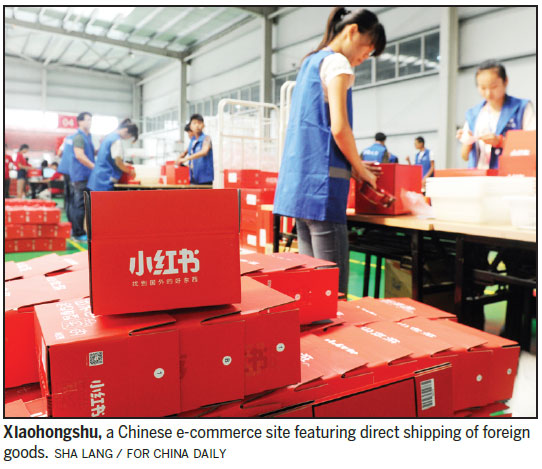
Global consultancy Oliver Wyman put this down to booming online e-commerce platforms in China. They have made massive strides in cross-border internet shopping, from Chanel handbags straight from France to cherries from the United States.
"Cross-border e-commerce has grown rapidly, overseas travel has democratized and there is greater availability of products at home," says Hunter Williams, a partner at Oliver Wyman and author of the report. "This means there is less need for buying overseas."
There was a modest "trip spending" rise of 3.5 percent year-on-year to 20,317 yuan ($2,995; 2,598 euros; £2,286) per person. This reflected the shift to more exotic locations.
Another reason for the decline was the drop in shopping for resale, or daigou, where individuals buy items overseas and sell them in China by charging commission.
Spending in this category fell drastically to 1,000 yuan per person last year from 1,800 yuan in 2015, the report said.
"Chinese travelers continue to shift their spending toward more meaningful experiences such as exquisite dining, extraordinary cultural journeys and even adventurous sports," Williams says.
"Those who rank shopping as the main reason to travel are generally from lower income brackets than those who rank retail spending as the second or third reason to go overseas," he adds.
In the United States, Chinese retail spending dropped from 41 percent to 28 percent, the survey found.
Only 5 percent of the 2,000 people polled ranked shopping as the No 1 reason to travel overseas.
This is partly due to online supermarkets and stores which bring the world to China.
By 2021, the combined cross-border e-commerce market in China is projected to hit 1.3 trillion yuan, according to Matthew Crabbe, Asia-Pacific research director at global consultancy Mintel.
"Transborder e-commerce is likely to be more relevant to brands looking at initial market entry," Crabbe says.
"Retailers and brands should therefore play to their different strengths when attempting to differentiate from their competitors," he adds.
Other findings released by Oliver Wyman include that Chinese tourists are staying longer in distant locations and traveling more with their families, especially children.
"That would indicate a greater proportion of spending was allocated to accommodations, dining and entertainment," Williams, the report's author says.
hewei@chinadaily.com.cn
















