Prudent monetary policy takes firm stance on deleveraging, speculation
Short-term pains will likely be traded for long-term economic health
China has been resolute in containing leverage and financial risks, as it endeavors to trade short-term deleveraging pains for the long-term health of the economy.
The People's Bank of China increased cash injections early in June to shore up liquidity, fueling speculation that the authorities were flinching from their ongoing deleveraging campaign.
Yet the PBOC shifted its tactic dramatically in late June and starkly reduced cash injections.
|
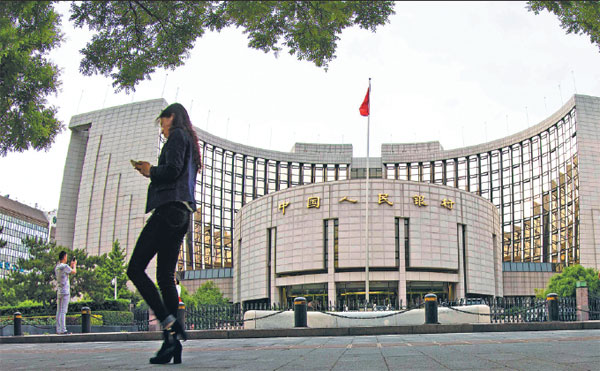
A pedestrian walks past the People's Bank of China's headquarters on West Chang'an Avenue in Beijing. Zhang Haiyan / For China Daily |
On July 7, the PBOC refrained once again from open market operations, on the grounds that liquidity within the banking system remained ample.
That made it the 11th successive trading day of open market suspension, and the maturation of 20 billion yuan ($2.9 billion) in reverse repos has led to a net liquidity contraction of 630 billion yuan in total since June 22.
To further quash speculation, the PBOC reiterated this week that it would continue with prudent and neutral monetary policy, use a range of monetary policy tools to maintain stable liquidity and place more importance on the prevention and control of financial risk.
Analysts said that given the Chinese leadership's strong determination and steady growth of the economy, the deleveraging was unlikely to reverse.
Calling the campaign a medium-term task, Citic Securities analyst Ming Ming said it would last a long while and remain unchanged, but the pace and intensity of policies would be fine-tuned to adapt to change.
Ming said China's deleveraging policies so far had been effective, proactive and scientific, and yielded results.
Growth of China's broad measure of money supply, M2, hit a record low in May.
Banks' outstanding wealth management products or WMPs totaled 28.4 trillion yuan at the end of May, down from 30 trillion yuan at the end of 2016.
The sector's fast expansion had been considered a major source of financial risk, as off-balance-sheet WMPs channel deposits into risky investments without adequate regulation.
However, progress cannot be achieved without costs.
Analysts warned that China's corporate sector was feeling the stress and expected a tougher time, as funding costs were rising and could rise further, while credit would become harder to access, especially for small and medium-sized firms.
As the campaign continues, analysts said liquidity conditions would remain tight for the rest of the year. The deleveraging stress, cooling real estate market and moderate investment growth will weigh on economic growth.
Challenges for policymakers lie in countering debt, shadow banking and long-term threats to the economy, without destabilizing short-term growth.
While keeping liquidity relatively tight to underpin deleveraging, the Chinese authorities have been careful not to squeeze liquidity too much to avoid dampening demand.
PBOC data shows that total social financing and new yuan-denominated loans both increased year-on-year in May, indicating robust financial support for the real economy.
Li Peijia, a researcher with the Institute of International Finance at Bank of China, said the campaign was still in a crucial stage, expecting monetary policy to remain prudent but with a tightening bias in the second half of the year.
Policymakers are unlikely to announce new policies to cut leverage, but will focus on better implementation of current policies while creating a long-term mechanism for a balance between stable growth and deleveraging, Ming said.
Lian Ping, economist with Bank of Communications, said the government should ensure credit for small and medium-sized companies and ease deleveraging stress.
Besides acting on the monetary front, the government should further improve its fiscal policy and unveil supportive industrial measures to ensure stable economic growth, said Zhang Jun, economist with Morgan Stanley Huaxin Securities.
China's economy grew 6.9 percent in the first quarter of the year, up from 6.8 percent the previous quarter and above the government's full-year target of around 6.5 percent for 2017.
Xinhua