G20 trade ministers agree to tackle global steel overcapacity
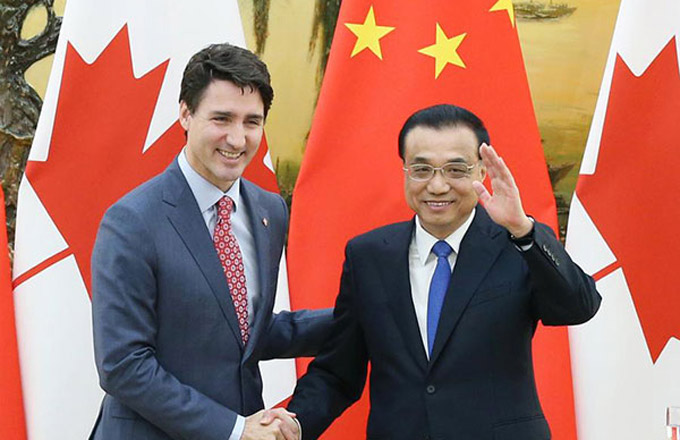
G20 trade ministers reached an agreement on Sunday to tackle steel overcapacity, according to Gao Hucheng, China's commerce minister.
They stated that excess capacity of steel and other industries is a global issue, and agreed to "strengthen communication, deepen cooperation, and take effective measures to deal with such a challenge", Gao said at a news conference of the G20 Trade Ministers Meeting in Shanghai.
China accounts for almost half of world steel production, while more than 80 percent of its iron ore depends on imports. Last year, the country exported 120 million metric tons of steel at a value of $61.2 billion, and imported 956 million tons of iron ore at a value of $57.2 billion.
"China's steel industry is not export-oriented," said Gao. "China is not only the world's largest steel producer, but also the biggest consumer."
The minister said among China's more than 220 steel trade partners last year, 154 of them produced no steel. Examined from a view of the world steel structure, Gao said, the solution is to ease the excess steel capacity of all countries, rather than blaming one single country.
China faces frequent investigations, and sometimes accusations, in the industry from Western countries. It is estimated that starting from the second half of 2015, there are more than 50 cases accusing China of dumping steel products, totaling $8.4 billion.
The Chinese representatives at the G20 Trade Ministers' Meeting said such countries certainly ignored Chinese companies' high efficiency and low labor and production costs, so China became the "victim of extreme anti-dumping measures".
The State Council has issued a plan to reduce crude steel output by 100 million tons to 150 million tons within five years, starting from 2016.
The latest official statistics show a slower growth rate of iron and steel exports.
In 2015, the total volume for the first five months increased by 50 percent compared with that of the same period in the previous year. However, the growth shrank to around 22 percent this year, said Shen Danyang, spokesman for the Ministry of Commerce.
"At the moment, one of the biggest advantages of China's iron and steel products in the global market is their high quality-to-price ratio," said Chen Jingfu, an analyst at the Mysteel Research Institute in Shanghai. "But in the future, it should stand out more in quality, service and brand building."
Contact the writers at jingshuiyu@chinadaily.com.cn and zhongnan@chinadaily.com.cn