Belt and Road will boost SCO strength
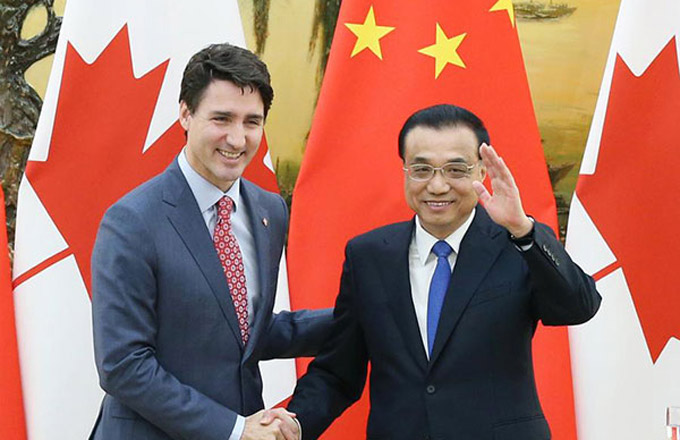
President Xi Jinping will attend the 16th meeting of the Council of Heads of State of the Shanghai Cooperation Organization in Tashkent on June 23 and 24 to end his eight-day visit to Serbia, Poland and Uzbekistan which started on Friday.
At the Tashkent meeting, he is also expected to discuss with other SCO leaders the applications of India and Pakistan to join the bloc, as well as other key issues including the fight against terrorism and transnational cooperation in the Beijing-proposed Belt and Road Initiative, the Silk Road Economic Belt and the 21st Century Maritime Silk Road.
Celebrating its 15th anniversary this year, the six-nation SCO was among the first regional organizations to address the issue of cross-border terrorism. In fact, before Uzbekistan joined the organization in 2001, the other five SCO members had already agreed to establish a routine communication mechanism involving their defense and law-enforcing departments. And on the day of its official founding, the heads of the six member states signed a pact on battling terrorism, separatism and extremism.
The Regional Anti-Terrorism Structure was set up in Tashkent in 2004 as a permanent SCO organ, followed by the establishment of the Secretariat in Beijing. Regularized exchanges, including annual meetings of security authorities and joint anti-terrorism training exercises such as the "Peace Mission-2014" and the "Tianshan-2-2011" have also contributed to the coordination among the member states on the military front.
Despite the United States-led anti-terrorism alliance, the Islamic State terrorist group has been threatening regional peace and exporting its extremist ideas to Central and Western Asia. And to counter the IS group's threat, all SCO member states have to abide by the new security concept of mutual trust, mutual benefit, equality and cooperation, and improve their joint enforcement and communications to better deal with emergencies.
As a whole, the organization should also seek to play a bigger role in rooting out extremism from Afghanistan and helping the peaceful reconstruction of the country by taking measures to cut off the financial support to terrorists and reduce drug-smuggling and money-laundering.
The possible inclusion of India and Pakistan, some observers say, may further complicate the situation - even deal a blow to the bloc's unity - because the two nuclear powers are in constant conflict with each other and often adopt very different foreign policies. So discussing the pros and cons of taking in more members is an essential task for the existing SCO members and in line with the "Spirit of Shanghai". The inclusion of new members in the SCO, however, will enhance the group's international reputation, expand its geopolitical reach and facilitate more multilateral exchanges, which will likely give it a bigger say in regional affairs.
Primarily focused on Central Asian affairs, the SCO has now added South and Western Asia to its agenda. That means it has to deal with increasing frictions within the group, because its members are at various stages of economic development and will thus adopt different approaches to safeguard their interests.
The Belt and Road Initiative, which basically covers all SCO countries - the six member states, six observer countries and six dialogue partners - is conducive to their pursuit of a community with shared destiny. For that to happen, however, all the countries involved need to make more efforts for the success of key demonstration projects while seeking closer cooperation in multiple fields, such as connectivity in Central and South Asia, trade and investment, and cross-border financing.
The author is secretary general of the Shanghai Cooperation Organization Research Center affiliated to the Chinese Academy of Social Sciences.