Science writer unveils the art of seeing things differently
Italian theoretical physicist Carlo Rovelli, one of the founders of a popular theory called loop quantum gravity, reads mostly classic literature.
In an e-mail reply to China Daily, the 60-year-old scientist says he loves the Chinese classics Dream of the Red Chamber and Journey to the West. Besides, he also reads a lot of essays on anthropology, studies of the brain, philosophy and so on. His favorite writer is Joseph Conrad.
Heading the quantum gravity research group at the Centre de Physique Theorique of Aix-Marseille University in Provence, Rovelli is now the author of Seven Brief Lessons on Physics. The book outsold the erotic best-selling novel Fifty Shades of Grey in Italy. It's been translated into 34 languages and a Chinese version is coming out.
|
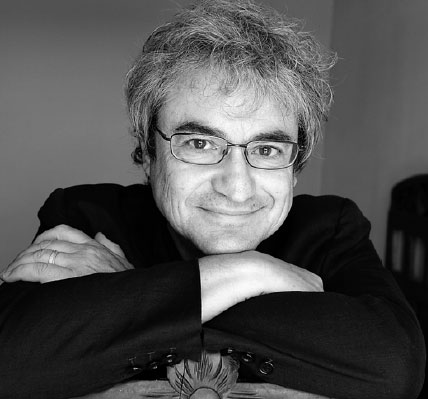
Carlo Rovelli offers in his new book enlightening lessons about modern science. Basso Cannarsa / Provided to China Daily |
"Originally, we were very curious about how a physics book of a mere 96 pages can beat a best-selling erotic novel," says Wu Wenjuan, editor in charge of introducing the book at China South Booky Culture Media Co.
"But after reading it, we found such an elegant and concise book full of passion inspiring you to understand the world from a totally different angle and urging you to think about your existence and the limit of your knowledge."
The volume actually contains only six lessons on physics themes, including Albert Einstein's general relativity, quantum mechanics, the structure of the cosmos, elementary particles, grains of space, and black-hole thermodynamics.
The last chapter returns to human beings: How humans understand the world as an impossibly minor player that "will not last long" on Earth, because "We belong to a short-lived genus of species. All of our cousins are already extinct. What's more, we do damage", as he puts in the book.
In graceful language, Rovelli concisely explains the greatest revolution in physics in the 20th century, depicting not only the reach and beauty of science but also "reveal (ing) to us just how vast is the extent of which is still not known", as he writes in the book.
Li Miao, professor at the School of Physics and Astronomy of Sun Yet-Sen University, writes in the preview of the Chinese version: "There is not a single difficult expression that will exclude readers who know little of modern sciences."
Li proofread the book and has also written his own books to popularize physics in China. "Meanwhile, the poetic writing is full of passion."
Inspired by his girlfriend, two years ago Rovelli started writing short articles about quantum, gravity, and his research on quantum gravity for Il Sole 24 Ore, an Italian financial newspaper.
These received much notice in Italy and have been expanded into the book.
The core idea is often simple after you eliminate extraneous details, he says.
For instance, the work of Copernicus in the 16th century is very technical and complicated, but his discovery can be stated simply: 'The Earth turns on itself and around the sun'," Rovelli says. So he tried to do the same for the discoveries of modern physics.
He starts the first chapter, the proposition of general relativity, from Albert Einstein's "loafing aimlessly", pointing out the value of wasting time for young talents.
"In his youth, Albert Einstein spent a year loafing aimlessly. You don't get anywhere by not 'wasting' time - something, unfortunately, which the parents of teenagers tend frequently to forget."
In explaining the complicated genius theory, Rovelli connects his personal experience as an undergraduate in Calabria, Italy.
Reading a rodent-gnawed textbook, he says, "every so often I would raise my eyes from the book and look at the glittering sea: It seemed to me that I was actually seeing the curvature of space and time imagined by Einstein".
Rovelli compares the uplifting epiphany moment to the appreciation of artistic works: Mozart's Requiem, Homer's Odyssey, the Sistine Chapel and King Lear.
Li Min, astrophysicist and secretary-in-general with Jiangsu Astronomy Association, shares that view. He says that like artists and writers, the most brilliant talent of a scientist lies not in his or her strong logic, but in intuition and imagination.
Science begins with a vision. Scientific thought is fed by the capacity to see things differently than they have previously been seen, Rovelli writes.
Besides beguiling important scientific discoveries, Rovelli also presents the perseverant attempts of the most brilliant minds in the 20th century to cross the ocean of the unknown to see a "simpler, deeper order" of the cosmos, to solve the problem that made Einstein's head hurt.
"This is what we call the spirit of science, which is the most important aspect that popular science readings should advocate," says Li Min.
yangyangs@chinadaily.com.cn