Will Paris yield a decisive climate deal?
The UN climate change conference in Paris in December is expected by many to deliver a decisive plan to curb global warming, more precisely to prevent global temperatures from rising 2 degrees Celsius (3.6 Fahrenheit) above the pre-industrial levels. Keeping temperatures below that level is what climate scientists have been fighting for since the 1992 Earth Summit in Rio de Janeiro, Brazil, where the world vowed to avoid undefined "dangerous" human interference with the climate system.
Alas, 20 years later when Rio de Janeiro hosted the UN Convention on Sustainable Development, the world hadn't done much to keep temperatures from rising above the 2C level this century. The world has not acted as an integrated community since the threat of the depleting ozone subsided after the Montreal Protocol to the Vienna Convention for the Protection of the Ozone Layer came into force in 1985.
The world doesn't function on the principle of one for all and all for one. Instead, it follows the principle of making the most of the available resources and exploring further to exploit potential resources.
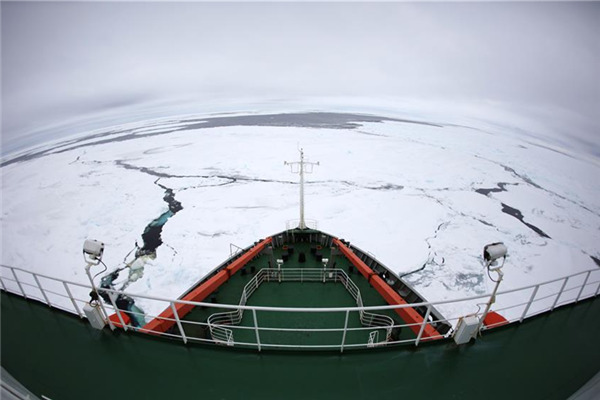
No wonder, many climate and social scientists fear that Paris could spell the doom for the 2C target, not least because greenhouse gas (GHG) emissions have reached record highs in recent years. Their fear is not unfounded, as floods, droughts and storms have been wreaking havoc across the globe, summers are getting hotter and winters colder, and sea levels have been constantly rising because of melting glaciers and disappearing Arctic and Antarctic ice sheets.
What's really worrying is that the proposed reductions in carbon emissions promised by governments - with pledges of deepening them further - are not enough to keep temperatures from rising above 2C this century. Added to that is governments' fear of incurring huge economic "losses" because of the shift from fossil fuels.
Perhaps this sorry state of affairs is what prompted David Victor, professor of international relations at the University of California, San Diego, to say recently: "Paris will be a funeral without a corpse." Victor fears the 2C goal will slip away (in Paris) despite many governments' insistence that it is still alive. Oliver Geden, of the German Institute for International and Security Affairs, puts it in the right perspective: "Two degrees is a focal point for the climate debate but it doesn't seem to be a focal point for political action."
The climate is changing for the worse. And climate change deniers were right when they said that contrary to popular belief 97 percent of climate scientists don't agree on climate change, because the actual figure is not lower, but higher. More than 99.9 percent of the climate scientists agree climate change is manmade and devastating, according to a new study reviewed by MSNBC.
After reviewing more than 24,000 peer-reviewed papers on global warming published in the last two years, National Physical Sciences Consortium Director James L. Powell said only five (repeat five) scientists reject the reality of rising temperatures or the fact that humans are the cause.
Adding to the fear is a new study that says most glaciers in the Mount Everest region, in 5,500 glaciers worldwide, could disappear or drastically shrink by the end of this century. So all that hullabaloo over the so-called leaks from University of East Anglia's Climate Research Unit before the Copenhagen climate conference in 2009 were just a diversionary tactic to fool people across the world about the realities of climate change.
As if the receding glaciers were not enough, another new study says only two continuous intact forests - the Amazon and the Congo - are left on Earth. This may not seem important to many, but trees, more precisely forests, store millions of tons of carbon, preventing it from escaping into the atmosphere and adding to the GHG emissions.
Vanishing forests, retreating glaciers, higher temperatures and rising sea levels do not point to a promising future irrespective of what the spin doctors of the market want us to believe. As things stand today, the future of the world looks bleak. Only a miracle can help the world clinch a comprehensive deal in Paris to save our plant. But for that, we need a new Messiah. The question is: Where is the new Messiah?
The author is a senior editor with China Daily. oprana@hotmail.com