Abstract from the 5-book series, China Today: Understanding the Communist Party of China
To put it simply, the Chinese miracle is the modernization of a nation with a population of 1.3 billion people. In other words, China has virtually completed modernization of its population in just over six decades. Once mocked as the "sick man of East Asia," China, an ancient civilization, has been revitalized to become a world power and has worked the Chinese miracle.
The Chinese miracle, therefore, is not a creation of some god, but should be attributed to efforts of 1.3 billion people. In the historical process of modernization, it is mainly because of the vast population in China that the nation's modernization is regarded as a wonder with worldwide implications. China, whose population outnumbers the total population of countries that have been previously modernized throughout the globe, is so huge that its modernization undoubtedly electrifies the whole world. In addition, since it equals the total population of the developed world, all of China's practices during modernization have universal significance, which has enlightened other developing countries and their peoples and set an important example in terms of diversity of culture and development paths.
Besides the huge population involved, sustained rapid development is another hallmark of China's modernization.
From Exploring the Miracle: The Truths Behind China's Modernization
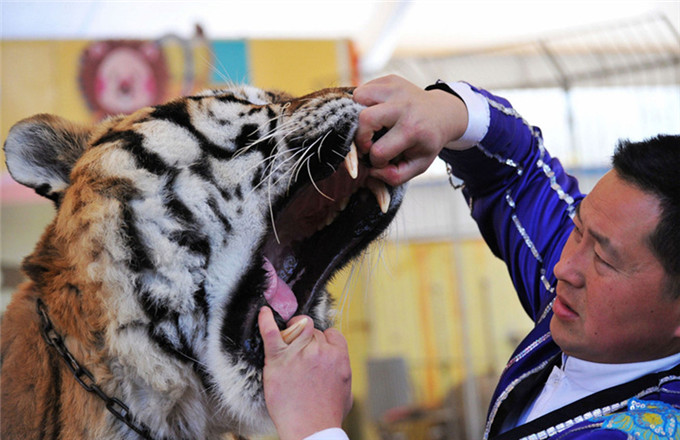
Resolutely fighting corruption is a clear-cut political commitment the Communist Party of China has always upheld, and an important political issue that the people show great concern about. General Secretary Xi Jinping pointed out, "The resolute determination in punishing and wiping out corruption demonstrates the strength of our Party, and it is a common aspiration of all Party members and the public as well." Meanwhile, he stressed more sharply that, for the Party to supervise its conduct with strict discipline, punishment should never be relaxed; it was necessary to continue to catch both the "tigers" and "flies," i.e., dealing with cases of leading officials in violation of Party discipline and state laws as well as misconduct and corruptions problems that directly affect the people's livelihood.
Punishment is an important component of China's anticorruption strategy. On the one hand, it directly hits at the conduct of actual corruption to make the corrupt pay the price, and on the other, it deters potential corruption to scare those who are ready to commit corruption. In terms of the so-called "magnitude" of corruption, the focal point of China's fight against corruption has undergone two rounds of change, i.e., from "investigating and punishing cases but usually small ones" to "investigating and punishing major cases" and then to "hunting down both tigers and flies." In most countries, the means of punishment usually include sanctions by law and by discipline. China's policy against corruption also attaches equal importance to both.
From The Good Fight: China's Recent Battle Against Corruption