Population shifts affect festival
People born in agriculture economy now uneasy about pace of change
China's population is undergoing major changes, affecting many traditional customs, especially the Lunar New Year or Spring Festival.
Three years ago, for the first time more than half of China's population was living in urban areas rather than the countryside. In five years, the country's urbanization ratio will hit more than 60 percent. And the one-child family planning policy implemented since the late 1970s has markedly shrunk the size of Chinese families. More and more old people live by themselves, and most families' bread-winners do not have brothers or sisters.
As the most important festival in China, the Lunar New Year of late last week, was a time for Chinese people who were born in an agricultural society, grew up in an industrial age and matured in an information era, to feel anxious by fast changes in the material world.
The Spring Festival dates back about 4,000 years ago and it is associated with many superstitions of an agricultural society. Basically, the festival marks the beginning of a new farming season in regions along the Yellow River in North China, where China's ancient civilization was born. Farmers offer sacrifice to the deities in charge of their food, land, life and money, as well as the dead in their families, on different days throughout the festival, appreciating their protection in the past and praying for their blessing in the future.
These ceremonies are observed by big family clans coming together. People living in villages in China usually share one or several main family names. It used to be much easier to organize a family reunion than today. Good food and new clothes are prepared for the festival, marking a rare time to satisfy one's appetite and apparel esthetics for the farmers mostly living a hand-to-mouth existence throughout a year.
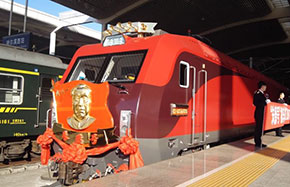
About 1 million such villages have disappeared in China's urbanization program in the past decade, involving more than 100 million people. Meanwhile, China's Internet user's population rose to 650 million from less than 10 million. Nearly half the country's 1.36 billion people take trains and planes or use automobiles to return to their hometowns during the festival for long-awaited family reunions.
But when they meet their relatives, they easily feel bored after endless feasts, and mahjong. Children growing up in cities would not be that willing to wear a new cotton-padded coat made by their rural grandmother for them. They prefer money. Red envelopes containing cash for relatives and friends' children add to the adults' financial burdens, but help them save face.
Different living and working environments leave relatives in a big family clan few common topics. Fireworks and smoked meat, a popular food in many places along the Yangtze River, are partially banned to avoid air pollution.
Temples and birthplaces of great people are crowded with quasi-believers during the festival. People burn a large amount of incense in front of various statutes of Taoism, Buddhism or Maoism, to pray for luck, health and wealth.
China Central Television's annual Spring Festival gala, a program popular since 1983 for its liveliness, has lost its audience, especially the young, because of its rigidity. Playing on smartphones and other gadgets is a major way for many middle-aged and young people to kill time during their hard-earned festival holiday.
The popularity of a red-envelope APP this year sheds light on the festival's lack of liveliness. Smartphone users can turn to their contact list to send and receive red envelopes. People are happy with even several cents of red-envelope money they received through the APP from some people they might not have contacted for years.
Some better-off families go abroad or to domestic tourist resorts during the holiday, partially to avoid bland Spring Festival routines. Last year, about 109 million Chinese traveled overseas, making China the largest tourist exporter in the world. Overall spending by Chinese travelers in foreign countries and regions is $165 billion, up 30 percent year-on-year.
Some experts affiliated with institutes funded by the Chinese government are eager to package Spring Festival into a part of China's soft power, partially to counter the influence of Western culture events, like Christmas Day. Yet before doing that, they should think about why Spring Festival has lost its influence at home. When the social and cultural connections for Spring Festival fade, blood ties appear to be the last reason to maintain the festival's meaning for families and the nation.
liyang@chinadaily.com.cn