Developer of hybrid rice views food security as vital to country
As a center of learning with a history of more than 100 years, Wuhan University continues to quicken the pace of becoming a truly international institution, as Zhao Xinying and Liu Kun report from Wuhan, Hubei province.
From the son of a farmer to a scientist working on hybrid rice, Zhu Yingguo said his original intention of attending Wuhan University and studying biology after he graduated from high school in 1959, was to reduce starvation.
Now a professor at Wuhan University and an academician of the Chinese Academy of Engineering, the 75-year-old said he had realized his dream with the success of honglian, a type of hybrid rice he developed.
With its good adaptability and high yield, honglian has been popular in many provinces of China, as well as some Southeast Asian and African countries, including Indonesia, Vietnam, Myanmar and Guinea. A total of 6.7 million hectares of land across the country and the world have been covered with Zhu's hybrid rice.
In July 2013, President Xi Jinping came to Zhu's rice experimental base during his visit to Hubei province.
"President Xi praised our achievements and encouraged us to make a continuing contribution to the food security of the country," Zhu recalled.
Born in a small county of Hubei province in 1939 and growing up at a time of economic hardship, Zhu, the oldest of his parents' three children, knew what hunger meant.
He still remembers that many people in his county died from hunger after a flood in 1954, and that he and his classmates in college had to endure the torments of hunger from 1959 to 1961, when China was experiencing a food shortage and starvation nationwide.
"Food security is vital to a country and its people," Zhu said, and bearing this in mind, he started research on hybrid rice in 1970s.
Since then, Zhu has traveled back and forth each year between his home in Hubei and the experimental bases in Guangxi Zhuang autonomous region and Hainan province.
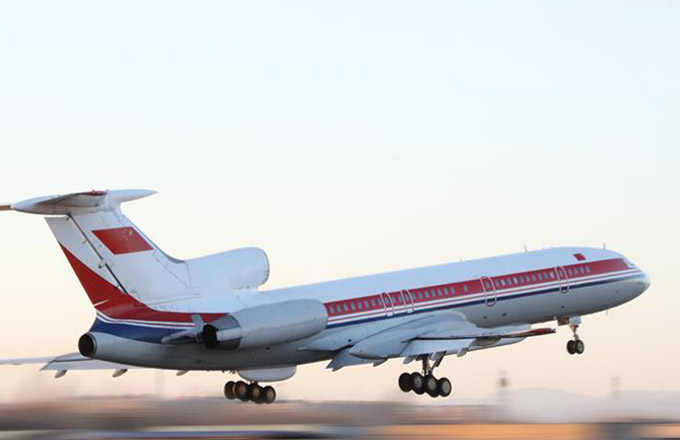
"Traveling to Hainan was extremely inconvenient in the 1980s, and it took a week to get there, taking train, ship and bus," Zhu said. "Now it only takes a couple of hours to get there by plane, which saves more time for us to do research."
As Zhu spent most of his time in rice field, he also required his students to do the same, even before they were officially enrolled.
He has 20 master's degree students and 10 doctorate students and asked them to stay in field from June to August, before the new semester started in September.
"Hybrid rice requires great amount of practical research in the field," Zhu said. "This is how I was trained when I was a student and how I cultivated honglian."