FTAAP a timely answer to China skeptics
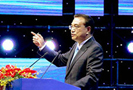
Leaders at the APEC conference in Beijing agreed to start the process of the Free Trade Area of the Asia Pacific on Tuesday. The move is "a historic step we took in the direction toward realizing the FTAAP", President Xi Jinping said at a press conference after the conclusion of the 22nd APEC Economic Leaders' Meeting.
In sharp contrast to the bandying of the "China threat" theory by some countries, China is willing to help expedite the building of the FTAAP. Because of territorial disputes and the resulting tensions in the South China Sea and the East China Sea, China has had to face severe criticism. Some countries and observers even said that like all economic powers in the past China too will boost its military might and try to change the existing world order.
As the second largest economy, China is expected by many to challenge the existing superpower both on the economic and strategic fronts. And, according to popular political theory, if the challenger is unhappy with the existing world order, it could launch a war against the dominating power to change the norms underpinning the existing order.
Since the United States has been the only superpower for long, it has played the dominant role in establishing the existing world order. The political norms of this order are multilateralism and sovereign equality. The economic norms are free trade, cooperation and integration, and the principal security norm is non-use of force.
The big question is: Is China unhappy with the world order or its norms?
At the ASEAN Foreign Ministers' Meeting in July, China rejected the Philippines' proposal of a "freeze" of the present situation in the countries' territorial dispute, which might have led many to believe that it could be unhappy with the world order. However, a country does not have to sacrifice its core interests even if it is satisfied with the world order. Plus, China has made it clear on more than one occasion that it will never compromise on sovereignty and territorial integrity.
China is a leading member of the international community and has fulfilled all its responsibilities in that capacity. In 2001, China entered the World Trade Organization, formally beginning the process of its integration into the world economy. China is the beneficiary of the present world order and follows all its norms.
On the other hand, its fast-paced economic growth has benefited the global economy and helped stabilize the world order. In 2010, China accounted for more than 50 percent of the global economic growth. China has the largest foreign exchange reserves, and acts as the stabilizer of the world financial system. During the global financial crisis, China prevented the US dollar from going on a roller-coaster ride - and deadly fluctuations in global exchange rates - by adding huge amounts of US treasury bonds to its foreign exchange reserves.
Again, thanks to China's efforts, the China-ASEAN Free Trade Area was established in 2010, which ultimately paved the way for the FTAAP. Living up to its promise, China will now speed up the establishment of the FTAAP. It will also make efforts to reform the multilateral trade regime. By helping integrate the Asia-Pacific region, China will strengthen free trade and strengthen cooperation and interdependence among the region's economies, and thus reduce the possibility of a war.
China's untiring efforts to start the process to establish the FTAAP are enough proof that it is not interested in starting any war. And even if the road to the establishment of the FTAAP is full of difficulties, China will take every precaution to ensure that prevailing global norms for free trade and regional integration are respected. It identifies itself with the norms and manifests good faith.
China's efforts to strengthen the world order, therefore, should answer skeptics' question on whether it is satisfied with the existing global norms or not.
The author is an assistant professor at the Hainan Provincial Party School.