Protect those most vulnerable to HIV
Monday is World Health Day. As the day approaches, we should recognize the huge progress the world has made in the response to HIV. Globally, new HIV infections have fallen by one-third since 2001. AIDS-related deaths have fallen to 1.6 million, compared with 2.3 million in 2005. More and more people living with HIV are leading long, healthy, productive lives.
In China, the coverage of lifesaving antiretroviral treatment has increased more than ten-fold during the past 10 years; new infections among people who inject drugs have fallen; and the number of women receiving treatment to prevent mother-to-child transmission of HIV has increased dramatically.
But despite these successes, we must continue to strengthen our efforts. In China there are still approximately 48,000 new HIV infections every year, with sexual transmission accounting for more than 80 percent of all new infections. As is the case in many countries, these are concentrated among the most vulnerable members of society, including men who have sex with men, sex workers, and people who inject drugs, populations which are heavily stigmatised and, in many cases, criminalized or otherwise subject to administrative arrest and detention.
HIV testing rates among these populations are low. Data from 2013 show that less than 40 percent of sex workers and people who inject drugs came forward to have themselves tested, and only 45.6 percent of men who have sex with men had received an HIV test during the past 12 months. As a result their risk exposure remains high. There is an urgent need to expand coverage of voluntary counselling and testing, prevention, treatment and care services among these most vulnerable populations.
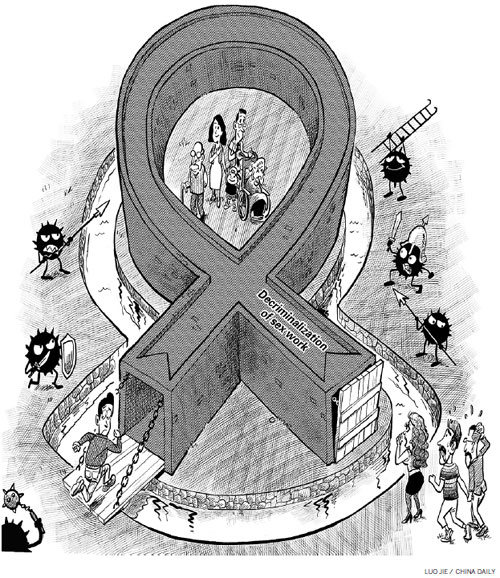
Evidence and international best practice demonstrate that in societies where those most vulnerable to HIV are protected and can access prevention, treatment and care services, more people do, and new infections and deaths fall. While there is no silver bullet, a crucial first step is often finding the determination to deal with laws or regulations that fuel stigma and discrimination, and drive those most vulnerable underground, thereby fueling the spread of HIV. Also key is building the capacity of community-based organizations to deliver services to populations which are hidden and difficult to access.
In responding to HIV and sexually transmitted infections among sex workers, men who have sex with men and people who inject drugs, we have seen that holistic interventions, such as community empowerment approaches, which seek to reduce vulnerability and risk of infection have proven most effective.
China has already made strong progress in its response to HIV among vulnerable populations. In 2011, China began scaling up "harm reduction" approaches for people who inject drugs, and new infections among drug users have fallen. China has also been successful in strengthening the community response to HIV among men who have sex with men.
But challenges remain in scaling up services targeted at sex workers. Sex workers, particularly low-paid sex workers and other highly vulnerable sex workers, experience multiple risk factors, including high prevalence of sexually transmitted infections, low HIV risk awareness and vulnerability to violence. In addressing HIV among sex workers, there is a need to promote greater community engagement and expanded coverage of prevention, treatment and care services. This will require stronger guarantees for the rights of sex workers to health, dignity and freedom from discrimination, combined with efforts toward decriminalizing sex work and the removal of laws and regulations which hinder the HIV response. One particular area of concern is China's system of "custody and education for sex workers", under which sex workers can be detained for up to two years without judicial process.
Health services, including HIV and sexually transmitted infection prevention services, which meet the specific needs of sex workers should be made available, accessible and acceptable. Violence against sex workers is also a risk factor for HIV that must be prevented and addressed in partnership with sex workers and sex worker led organizations.
In its response to HIV, China has consistently demonstrated a strong commitment and a willingness to do the things that work. Through working to build an inclusive society where the most vulnerable can access services freely and easily, China will be able to achieve accelerated progress in its response to HIV.
This piece is issued by UNAIDS China, UNFPA China, UN Women China, UNDP China and ILO China.