Light from the solar panel darkness
Europe and China should turn troubled trade talks into positive action on solar power
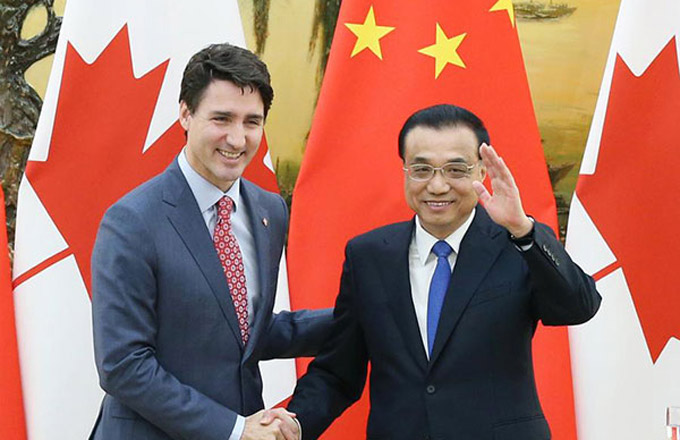
The recent visit by Chinese Premier Li Keqiang to Europe helped focus on the need for dialogue instead of a trade war.
Member countries in the European Union now say they prefer dialogue, leaving the European Commission almost alone in its aggressive and counterproductive approach.
In the solar panel dispute, all the important member states in EU have explicitly stated that they do not want a trade war with China and that solar development must be a priority for EU and the world.
Most important is obviously Germany. Not only is it the economic engine of Europe, it is also a leading low-carbon champion that wants to phase out nuclear power and focus on renewable energy, where solar solutions are a key component.
The discussion in key EU member countries, encouraged by the visit by Li, has resulted in explicit support for the import of Chinese solar panels, even among heads of state, who seldom engage in individual trade disputes.
The destructive approach from the commission has therefore resulted in a situation where the technical trade issue has moved to a new and more strategic level.
It is now no longer only about the trade aspects; it is about a vision of a sustainable solar future.
This shift in focus could be something very positive for the long-term China-EU relationship if action is taken soon to show citizens that China and the EU are serious about dialogue.
Today the relationship is very often described in monetary terms related to trade volumes. This is obviously important, but trade is only a tool, not an end in itself.
Ordinary citizens are not that interested in trade disputes, but they are interested in a positive vision that results in new sustainable jobs and collaboration.
The trade dispute provides a unique opportunity to put a more human and sustainable face on China-EU relations, and solar panels are the perfect symbol for a transformational dialogue.
As solar panels will play a very important part in tomorrow's sustainable energy system, and are linked to smart changes in a range of areas from buildings to mobility, they tend to be used to symbolize a smarter society. Most images of a better tomorrow in the EU include solar panels as a way of illustrating a positive future.
But solar panels are only a small part of a smart system. Smart architecture, smart buildings, smart city planning and smart appliances are all needed.
Smart solar solutions are also often linked to more sustainable lifestyle choices and values that go beyond short-term economic self-interest. The links to many different parts of society, and the symbolic value of solar panels, could become the key that unlocks the door to a transformational dialogue between China and the EU.
Instead of looking at solar panels only from a technical trade perspective, China and the EU should initiate a dialogue this year about a global solar future.
This dialogue should include all sectors of society, not just those directly involved in the trade of solar panels such as the building and transport industries. A range of representatives from schools and hospitals to game developers and designers could be included to discuss how they can support China-EU collaboration for a solar future.
The central and visible part of such an initiative would be a global solar map that would track the development of solar installations. It would show things that people care about, such as new jobs created, new innovations developed and CO2 reduced.
Such a map could also gather contributions from anyone who wants to be a part of the solar future, from schoolchildren who can upload paintings of the future, to projects by EU and Chinese universities. Every household in China and EU could see how collaboration helps create a better tomorrow with the aid of smart solar solutions.
The initiative would be more about political leadership than money because it would cost less than 100 million yuan ($16.3 million; 12.2 million euros) to develop and manage such a global solar map.
It is important to have goals for the dialogue, and the map could track the progress towards these goals. Possible goals might include having 100 million people engaged in different collaborative initiatives to reduce CO2 emissions by 100 million tons in two years.
Within five years, such an initiative could help contribute to a new generation of cities where sustainable solutions are provided by clusters with smart solar applications, not just in China and the EU but around whole world.
A solar dialogue would be ambitious and positive, an opportunity to turn something negative into something positive. As the EU is so fragmented, such an initiative would probably have to come from China.
The time is right, and many would welcome a transformational dialogue that would also support a solar future and a dream China and EU can share.
The author is founder of 21st Century Frontiers in Sweden.