Real economy in next 'through train'
Updated: 2015-06-13 08:01
By Celia Chen in Hong Kong(HK Edition)
|
|||||||


UBS optimistic global investors will have access not on offer with two mainland bourses alone
International investors can be assured of unhindered access to the Chinese mainland's real economy once the much-heralded Shenzhen-Hong Kong Stock Connect gets underway.
Such an access is unthinkable with the Shenzhen Stock Exchange alone as it caters mainly to enterprises concerned with the new economy, nor with the Shanghai bourse, which is merely a platform for traditional large-cap companies.
The views come from global investment and wealth-management giant UBS, as the second stocks cross-trading link between Hong Kong and the mainland is widely expected to take off in the second half of this year.
"The small and medium-sized enterprises (SMEs) listed on the Shenzhen Stock Exchange, especially the Internet companies and information-services corporations, merely represent the nation's new economy," says David Rabinowitz, head of direct execution Asian equities at UBS. "And, the Shanghai Stock Exchange mainly provides a platform for traditional large-caps to float."
In his view, the Shenzhen-Hong Kong stocks link exactly comforts global investors' quest to make the best out of the mainland's real and new economy chain.
Shenzhen stands to attract increased foreign interest as the nation transforms itself from an old economy following an investment-driven and energy-intensive path to a new economy, tracking a consumption-driven and environmentally-friendly path.
However, investing in Shenzhen SMEs is fraught with higher risks compared with the "big caps" in Shanghai. Rabinowitz warns that the domination of retail investors in mainland stocks trading, especially with more borrowed cash, will increase losing risks.
A UBS report says one only needs to consider the 119.9 million personal investors licensed to trade in small- and mid-cap enterprises listed in Shenzhen to get a sense of the significant retail bias that pervades the mainland's financial markets.
On the Shanghai Stock Exchange, there are also 114.4 million personal investors with registered trading accounts, potentially not mutually exclusive. Here, the enormity of the mainland's investor base comes into focus, says Rabinowitz.
He suggests that investment education programs on mainland stock markets are important to foreign investors when they try to optimize a portfolio to invest on the mainland, especially in Shenzhen-listed stocks, of which only 30 percent are State-owned enterprises, compared with 70 percent of Shanghai stocks being controlled by the nation.
To understand the structure of the mainland's stock markets, Rabinowitz thinks it's worth noting that Morgan Stanley Capital International (MSCI) indexes will include 1,888 mainland A-share constituents in its Investable Market Index series if an inclusion is possible in the near future.
Rabinowitz admits that the failure of Chinese mainland A shares to be included in the MSCI Index has hit some aggressive investors, but he expects China to expand the quotas under the Qualified Foreign Institutional Investor program and ultimately scrap the restrictions.
celia@chinadailyhk.com
|
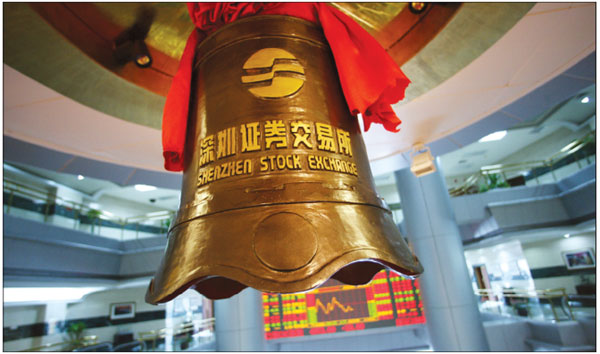
Analysts have urged international investors to learn more about the mainland stock markets when they try to optimize a portfolio to invest on the mainland, especially in Shenzhen-listed stocks. Lucas Schifres / Bloomberg |
(HK Edition 06/13/2015 page7)