Final reflections on Hong Kong SAR political reform
Updated: 2014-08-26 07:12
By Ho Lok-Sang(HK Edition)
|
|||||||


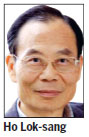
I attended the forum on political reform in Hong Kong hosted by the Standing Committee of the National People's Congress (NPCSC) in Shenzhen last week. It was attended by around 300 people. Some 30 people were randomly chosen to voice their views.
The forum was chaired by Li Fei, NPCSC deputy secretary-general and HKSAR Basic Law Committee chairman. Concluding the session, he stressed the importance of national security and holding the line against those who threaten the central government with "civil disobedience". Giving in to demands supported by threats will invite chaos and worse problems in future. He said the central government would steadfastly promote universal suffrage within the framework of the Basic Law.
Li's strong, unambiguous message doubtless disappointed the "pan-democrats". This is the view, often reflected by certain commentators in the Hong Kong press. The opposition camp had been conceding ground from their original position of demanding "public nomination" as an indispensable component of the political reform package, to a "three-pronged approach enlisting public nomination, party nomination, and nomination by the Nominating Committee (NC)" without specifically requiring public nomination, and finally to "any political reform package that abides with international standards".
I was not surprised by Li's tough comments, although I hope the central government will adopt a lower nomination threshold and also expand the NC to allow more public participation in the nomination process.
I was not surprised because a year's tough talking from the "pan-democrats" has done nothing to increase the level of trust. It has only invited suspicion. Indeed, at a forum organized by the Civic Party on "Public Nomination: Nothing to Fear!" on Oct 6 last year I proposed concrete ways to build trust in order to win a lower nomination threshold. I was booed by the audience. I explained that we needed to take Beijing's concerns as a real constraint and we need to ease these concerns and seek the lowest threshold possible. These pleas were greeted with disdain.
Beijing's worries about foreign forces attempting to undermine its rule are not without grounds. But some "pan-democrats" think they can force the issue by seeking support from other countries. But this only intensifies the level of suspicion.
I am aware that a sizeable proportion of the Hong Kong public favors an election that allows a greater choice of candidates than may be possible under the existing Election Committee and 50 percent approval requirement. Li has explained that the requirement is necessary for national security reasons.
I continue to believe my three proposals should help ease the central government's concerns. I should explain how each will work with clearer examples. They are respectively:
1. An aspiring Chief Executive (CE) candidate must pledge allegiance to the Basic Law and the Constitution, and to respect the "One Country, Two Systems" policy. The electoral laws should be amended so anyone who spoke or behaved in ways inconsistent with the pledge would be disqualified as a candidate for the role of CE.
Example i: Someone who promotes "public nomination" does not respect the Basic Law and so will be disqualified;
Example ii: Someone who calls for subverting the mainland's political system does not respect the Constitution and so will be disqualified;
Example iii: Someone who advocates "Occupy Central" does not respect Hong Kong's laws and so will be disqualified.
2. An aspiring candidate for the role of CE must win one-eighth of the NC members' nominations from each of the four sectors in the NC. This proposal was made by Shih Wing-ching and seems to be eminently workable, in the sense of obtaining a collective nomination from the NC while lowering any risk of there being opposition to the central government.
3. At the election stage, in the first round a negative vote will be available for voters who do not trust a candidate. Anyone who gives up voting for someone he likes can use his vote against someone he dislikes and does not trust. The top two candidates with the largest net positive votes will go into the second round for a final vote. This is equivalent to allowing Hong Kong public to screen out candidates who might cause problems. Given the pragmatic attitude, as revealed in numerous surveys of the people of Hong Kong, problematic candidates will not progress to the second round.
There have been calls for the NC to be expanded. As long as the expansion is moderate this request may be entertained without endangering national security. My personal view is that we can follow the four sectors as in the Electoral Committee, and invite anyone interested in joining the NC to apply for membership. Those deemed by the Electoral Office to belong to one of the four sectors will go through a random draw, so that each sector will have an additional 150 members. The total membership would then be no more than 1,800. This would not significantly modify the composition of the NC and would promise stability.
The author is director of the Center for Public Policy Studies at Lingnan University.
(HK Edition 08/26/2014 page9)