What makes good government?
Updated: 2013-07-23 07:23
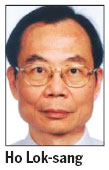
By Ho Lok-sang(China Daily)
|
|||||||


Winston Churchill is reputed to have remarked: "Democracy is the worst form of government - except for all the others."
The implication is that despite all the problems associated with democracy, it is still considered the lesser of evils. In this context, governments are considered to be either democratic or undemocratic, and undemocratic forms of government must be worse.
Undemocratic governments generally refer to authoritarian states that dictate policies and institutions against the wishes of people. Worse still, the officials who wield power are self-serving, and may arbitrarily take properties from citizens and persecute anyone they dislike. In democratic regimes, on the other hand, governments that are predatory can be voted out of power, so people can look forward to a better life under an alternative government.
But quite apart from the simplistic nature of this view, there is little worry Hong Kong is susceptible to authoritarian rule. Hong Kong upholds the rule of law and practices press freedom. Regardless of the outcome of the electoral system reform, and regardless of who is elected, the Chief Executive, and for that matter, all Legislative Council (LegCo) members and Executive Council members are held accountable. No one is above the law, and Hong Kong's judiciary will remain independent.
According to the World Justice Project, Hong Kong enjoys open government (10th in the world among 97 jurisdictions), freedom from corruption (9th in the world), and order and security (2nd in the world). The city rates somewhat less well in fundamental rights (31st in the world) and limited government powers (22nd in the world) but still well above average. Overall, Hong Kong is among the world's most attractive places to be born in (10th in the world among 80 rated, according to the Economist Intelligence Unit 2013 report). Hong Kong is ahead of Germany and the US (both 16th). Britain is 27th. "Not so democratic" Hong Kong is well ahead of many democratic countries. According to The Economist, the where-to-be-born index 'earnestly attempts to measure which country will provide the best opportunities for a healthy, safe and prosperous life in the years ahead.'
It seems clear to me that what matters more than electoral democracy is whether the government can deliver - i.e., meet the key needs of the people, rather than whether the government is popularly elected. China, at 49th spot in the where-to-be-born index, is well ahead of India (66th). According to the World Justice Project, China outperforms India in freedom from corruption, order and security, and criminal justice. India performs better in limited government and in fundamental rights.
Many of those who quote Churchill take democracy to mean just electoral democracy. But under such an interpretation he would be wrong. If he were right, India should have done better than China; and the US should have done better than Hong Kong. Readers of course are correct in pointing out that a higher place in the where-to-be-born index ranking may be due to factors other than government. Geographic location and natural endowment are two important factors that have nothing to do with the government. But the ineptness of the Indian government in dealing with illiteracy, public-health problems, and poverty is glaring. Also, considering that the democratic US waged a war with Iraq against the will of the international community, has continued with its drone attacks on people not yet convicted of crimes, and kept untried people in Guantanamo prison against its own constitution, its electoral democracy has not been very successful in containing power abuses.
My argument is that preventing power abuses and upholding the rule of law should be the focus of public concern, rather than the eligibility of people for the candidacy of the CE post. The latter of course is an important issue, and public discussion on the issue is welcomed. Still, we need to recognize that Hong Kong is uniquely blessed with having a credible judicial system and press freedom, fantastic infrastructure, and an enviable geographical location. The government has successfully maintained public order, so Hong Kong is one of the world's safest cities. Thanks to good public hygiene and a well-functioning health-care system, Hong Kong people enjoy longevity that is the envy of the world.
Although housing is a problem, and living space is cramped, almost half of Hong Kong's people live in affordable, government-subsidized housing, and the Chief Executive is making a gigantic effort to boost housing supply. The SAR government is also increasing the supply of land for commercial purposes, which will make Hong Kong more competitive and will allow the Hong Kong economy to be more diversified. At the same time, the government is also addressing the poverty problem. For the first time in Hong Kong's history, the government has agreed to adopt a poverty line for assessing progress on the poverty alleviation front.
This is not to say that everything is fine. But if we are making good progress on so many fronts, and if peoples' basic rights are protected through the rule of law, what is the justification for civil disobedience? In every society there are things that we are disgruntled about. Civil disobedience must be reserved for tyrannical situations, which, fortunately for Hong Kong, have spared us.
The author is director of the Center for Public Policy Studies at Lingnan University.
(China Daily 07/23/2013 page1)