'Happiness formula' for kids: love, insight, fortitude, engagement
Updated: 2012-10-23 07:28
By Ho Lok-Sang(HK Edition)
|
|||||||


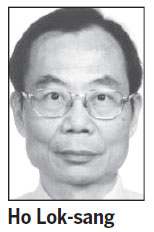
I completed a study a while ago for the Early Childhood Development Research Foundation. It is a survey of school children from Primary 4 to Secondary 3. Conducted early this year, the survey attempted to pursue an investigation of the interaction between parents and children.
One notable finding is that the happiness of Hong Kong children keeps declining as they move into adolescence. The sharp and monotonic decline is common for school children in local schools as it is in international schools. This pattern, however, turns out to be quite common. In Europe, North America, as well as in Australia, this pattern has been repeated, suggesting that a decline in happiness among school children as they move into more senior years may be universal. Possible causes include physiological development and increasing pressures.
As children's happiness decline moving into the teens, parents' happiness also shows a similar decline. Parents' happiness peaks when their children reach the age of 13, at which time parents report happiness at 7.05 (on a scale of 0 to 10). When children reach the age of 15-17, parents report happiness of 6.41. Parents with adolescent children clearly face a lot of pressures. They often do not know what to do. Unfortunately, parenting skills do not come to parents automatically. To raise confident, happy, and healthy children, parents need guidance.
The study, as well as other studies that I have conducted since 2008, has confirmed a "happiness formula" based on four mental qualities: love, insight, fortitude, and engagement. Love is simply a genuine concern and care for others' welfare, in particular other members in the family. Insight is just another word for wisdom, and comprises several elements: a sense of proportion or balance, being able to distinguish between ends and means, understanding success more in terms of achieving one's potential than in terms of impressing others, among others. Fortitude is simply another word for resilience, while engagement is purposive and active living. It is found that love, insight, fortitude, as well as engagement tend to decline in inverse proportion to the age of the child.
Another important finding is that children's love is inextricably and foremost tied to a healthy, loving relationship between their parents. It is also related in declining order to perceptions that parents respect their opinions, their privacy, and show that they are caring. Clearly, children learn from their parents' example. It is also found that the commonly alluded to "generation gap" between older parents and children is not really a problem, if children feel that their opinions and privacy are respected.
Perhaps most puzzling is the finding that families with siblings are usually less happy than families without siblings. Family disharmony is more often found in families with more than one child. This apparently puzzling result may be associated with the competition for parents' attention and a perception of uneven treatment. A recent Time Magazine cover story actually pointed out that favoritism is a common phenomenon and that it produces damaging effects, especially on the less favored child but sometimes also even on the favored child, who could be burdened with a sense of guilt.
Still another puzzling result is that extra curricular activities appear to produce even more pressures than school work. At one time, extra curricular activities used to take pressures away from school work, because they were fun. Today, unfortunately, many school children have come to realize that they need to decorate their CVs or portfolios with a rich array of extracurricular activities. Many parents are known to arrange all kinds of activities for their children: piano lessons, ballet, art, swimming, etc. These are great if they are not excessively burdensome and if the children like them.
One final result from the study is that happiness is related to the "disposable time of school children", which is defined as time after commuting, school hours, and homework. This is obviously related to pressures. When a child's weekly time table is all packed with different things, he will be deprived of leisure, which everybody needs for a breathing space. If we care for the well being of the child, surely we want to leave some breathing space for him!
The author is director of the Centre for Public Policy Studies, Lingnan University.
(HK Edition 10/23/2012 page3)