Property prices: Tough talk but little action
Updated: 2010-09-09 07:47
By Li Tao(HK Edition)
|
|||||||


|
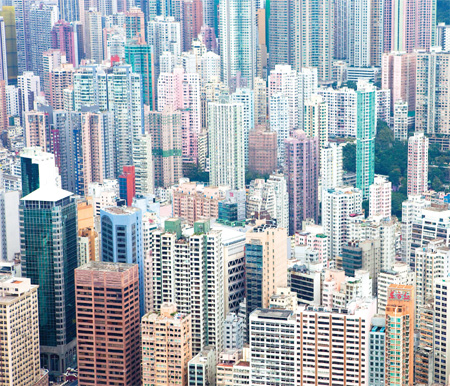
An aerial view shows properties in the Mid-Levels area of Hong Kong. The city's government has taken a series of measures in recent months to cool down the red-hot property market. Paul Hilton / Bloomberg news |
When it comes to tough talk about pouring cold water on the city's red-hot property sector, the Hong Kong government certainly says all the right things. However, its words are having little effect.
"We are determined to stabilize the city's property market," said Financial Secretary John Tsang in August, adding that the government would introduce further measures if necessary. He also noted that house prices are approaching peak 1997 numbers, which was followed by a six-year slump.
The government is clearly concerned about a property market bubble. But the remedies - essentially tightening downpayment rules on luxury homes and increasing the supply of land - appear to be rather mild compared with that taken by the Central Government and by authorities in Singapore.
But why is this the case? One reason is that the government may be afraid of the 1997 disaster repeating itself if it takes too rigorous an approach, said Eddie Hui, a professor at the Department of Building and Real Estate at the Hong Kong Polytechnic University.
Capital gains tax?
However, he does advocate the introduction of a capital gains tax to rein in the market, albeit cautiously. "I think the rule is applicable in Hong Kong if the conditions are less strict," Hui said. "It will not hurt real homebuyers."
"The Hong Kong government is trying hard but missing the target," Joseph Tang, head of Capital Markets at Jones Lang LaSalle told China Daily.
"Collecting capital gains tax or imposing fines on owners who resell their property within a certain period after the purchase would be the most effective way to curb speculation in the market. The government does not want to do that," Tang said.
But that is also in keeping with the Hong Kong government tradition of not interfering with the market, the other main reason for the lack of strong action to curb property speculators.
Nicole Wong, Regional Head of Property Research at investment bank CLSA, said the mild measures are in fact in line with the city's established practice over the years.
"The Hong Kong government has never imposed any severe measures in regulating the city's property market since the handover. Apart from the reason that Hong Kong's home prices were tumbling until 2003, the city's long established free market keeps the government from intervening too much with the economy," said Wong.
Wong agrees that imposing a capital gains tax like the Singapore government may provide an instant effect, but pointed out that Hong Kong does not have the same tradition of regulating economic activity.
She also believes that it is not necessary for Hong Kong to imitate the actions taken in other markets since economic status is variable.
But Wong said the government could help alleviate speculation in the property sector by supplying more land aimed at the medium-income demographic and raising downpayment requirements for mid-range homes.
"Hong Kong's home prices will continue to rise in the near future as short supply of homes will continue for the next 18 to 24 months," she added.
China Daily
(HK Edition 09/09/2010 page3)