Yuan rise no trade deficit solution: Lin
Updated: 2009-11-10 08:58
By George Ng(HK Edition)
|
|||||||


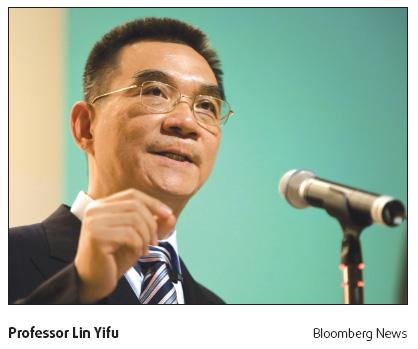
HONG KONG: The appreciation of the Chinese currency will not solve the US trade deficit problem, said World Bank Chief Economist Professor Lin Yifu in Hong Kong yesterday. Professor Lin was giving a guest lecture at the University of Hong Kong entitled "Shifting Paradigms on Both Sides of the Global Economic Imbalance".
As America's trade deficit increasingly swelled in recent years, the exchange rate of China's currency became a hot topic, with many US officials blaming China for "deliberately undervaluing" its yuan to boost exports.
However, Lin, who is a leading economist on China, said that data do not support the theory that "undervaluation" of the yuan has caused the global economic imbalance, particularly the US trade imbalance.
While America's trade deficit with China has been increasing, it has accounted for only approximately one third of its total foreign trade deficit during the period from 1990 to 2007, he noted, citing statistics from the International Monetary Fund.
He said trade imbalance is a structural issue. "A change in relative prices, as advocated by many, will not correct the situation," he said.
The yuan has appreciated over 20 percent since China revalued its currency in 2005. However, America's trade deficit with China continued to rise in recent years, he noted.
"This was because China's exports, mainly consumer products, complement US products," he said, adding that the US has to import these consumer products either from China or other countries, as it does not produce such products.
Moreover, as the global economy is still recovering from the deepest financial crisis since 1930, yuan appreciation will not help solve the imbalance problem. Rather, it could make things worse, Lin said.
On the one hand, a dearer yuan will make China-made consumer products more expensive in the US, weighing on the buying power of US consumers, and therefore dampening their demand for domestically-produced products as well, he explained.
On the other hand, some Chinese products may be replaced by products from other countries as the Chinese products become more costly as a result of yuan appreciation, Lin added.
Both scenarios can delay economic recovery in China and the US, he said.
The World Bank economist emphasized that the trade imbalance can be solved only through structural reforms on both sides.
On the US side, reigning in the large and growing fiscal deficit and continuing to encourage the recent rise in personal savings in the wake of the financial crisis would go a long way toward strengthening financial fundamentals, Lin said.
On the China side, positive structural changes in the Chinese economy would include reducing the very high savings rate and reducing income disparities, which would help boost domestic demand and reduce the country's reliance on exports for growth, he said.
(HK Edition 11/10/2009 page3)